Just shipping · October 2026
Is the Canon EOS R8 Mark II
worth the IBIS upgrade?
Canon finally puts stabilization in its lightest full-frame hybrid. Here is what changed versus the R8, who it is for, and whether to wait or buy.
Direct answer: The EOS R8 Mark II is Canon’s lightest full-frame body with 5-axis IBIS, about $1,899 as it ships in late October 2026. It keeps 24.2MP, Dual Pixel AF II, and uncropped 6K-oversampled 4K60, then adds a joystick and cleaner 10-bit files. Buy it if handheld hybrid work mattered more than the original R8’s feather weight.
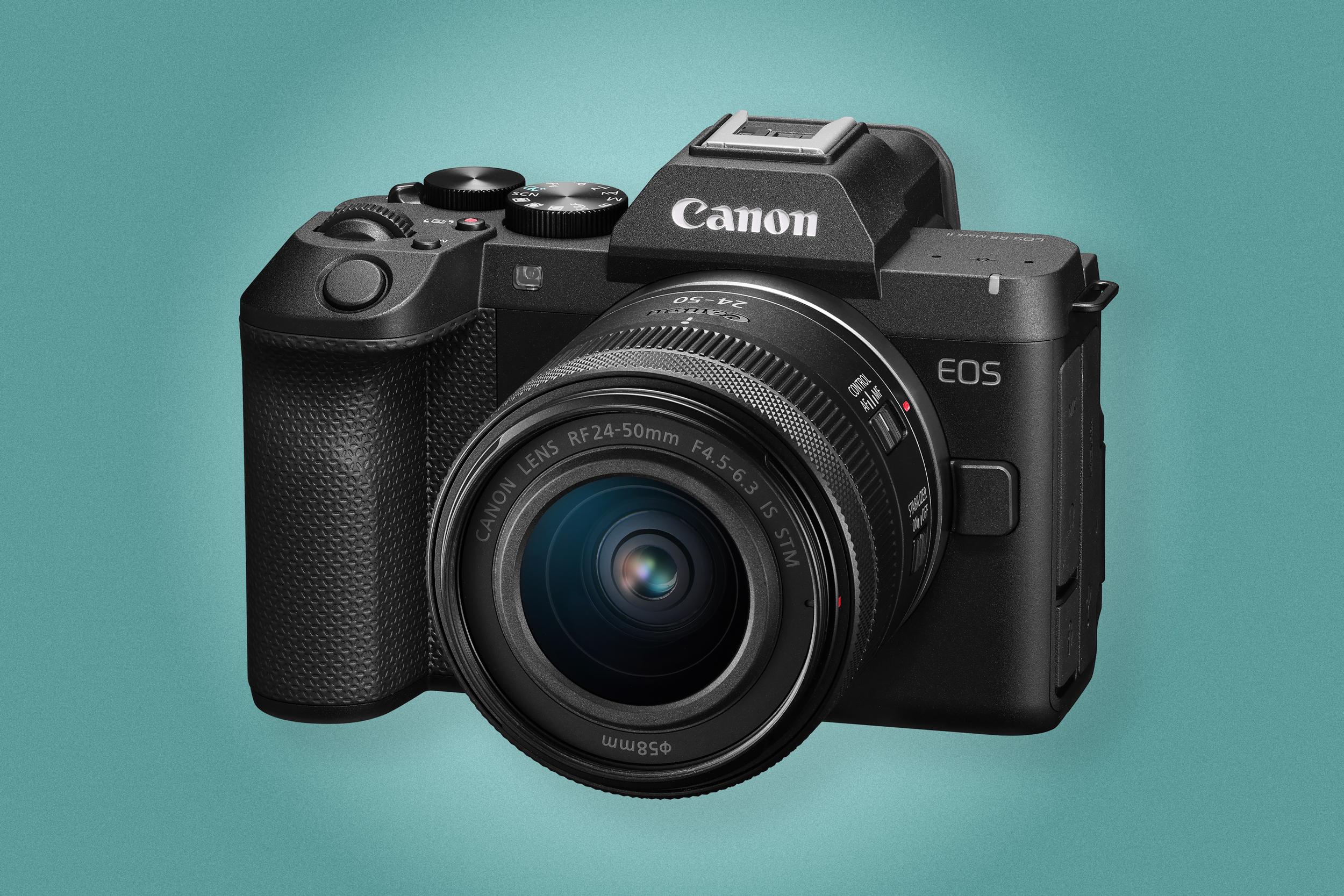
Three and a half years after the original EOS R8 launched as Canon’s lightest full-frame mirrorless, the Mark II answers the one complaint that kept many hybrid shooters away: no in-body stabilization. Canon announced the camera in mid-September 2026 and aimed US availability at late October, with Japan listing a 29 October 2026 release. Canon USA’s shop now shows the body in stock at $1,899.
Coverage from CineD and launch notes from Canon frame it the same way: keep the proven 24.2MP full-frame pipeline, shrink the ergonomics refresh around IBIS, and leave 7K open gate and internal RAW to the R6 Mark III / R6 V tier.
What is new on the EOS R8 Mark II vs the R8?
The headline is 5-axis IBIS with Coordinated Control when you mount an optically stabilized RF lens, plus Peripheral Coordinated Control aimed at edge blur on wide glass. Canon rates coordinated correction at up to 7.5 stops at the center and 7.0 stops at the periphery (CIPA 2024 figures with the RF 24-105mm F2.8 L IS USM Z at 105mm). The original R8 had none.
That stabilizer is not free in the chassis. The Mark II weighs about 546 g with battery and card versus roughly 461 g on the R8, and the body is nearly 10 mm deeper. Canon still calls it the lightest EOS with IBIS.
Handling and stills extras matter day to day:
- Multi-controller joystick for AF point moves during video (missing on the first R8).
- Pre-continuous shooting that can buffer up to 20 frames before the shutter press, with up to 40 fps electronic shutter.
- Deeper burst buffers: Canon cites about 58% more uninterrupted JPEGs and 30% more RAW frames than the R8.
- Register People Priority and what Canon describes as more tenacious Dual Pixel CMOS AF II tracking.
- Wi-Fi 6, Bluetooth 5.3, tally lamp, and the same LP-E17 battery class.
EOS R8 Mark II
New compact hybrid
- Sensor
- 24.2MP full-frame
- IBIS
- 5-axis, up to 7.5 stops
- Video
- 4K60 oversampled, FHD 180p
- Codecs
- XF-HEVC S / XF-AVC S 10-bit
- Weight
- ~546 g (batt + card)
- US price
- $1,899 body
Best ifYou want handheld full-frame travel size with a joystick and modern files.
EOS R8 (2023)
Original light body
- Sensor
- 24.2MP full-frame
- IBIS
- None (lens IS only)
- Video
- 4K60 oversampled, FHD 180p
- Codecs
- Mostly 8-bit; 10-bit in Log/HDR
- Weight
- ~461 g (batt + card)
- Launch price
- $1,499 body
Best ifYou shoot on sticks or IS glass and want the cheaper, lighter body.
How do the video specs compare for hybrid creators?
Resolution ceilings barely move. Both cameras deliver uncropped 6K-oversampled 4K up to 60p and Full HD up to 180p. There is still no 4K120, no internal RAW, and no open gate. Those stay on higher R6-class bodies.
What does change is the file side. The Mark II adopts Canon’s newer XF-HEVC S and XF-AVC S families with up to 10-bit 4:2:2 without forcing Log, plus Look File / LUT support and Slow & Fast mode with audio at high frame rates. Canon Log 3, Canon 709, PQ, and HLG sit under Custom Picture. CineD notes roughly 225 Mbps for XF-HEVC S 4K60 10-bit and about 40 minutes of 4K60 per charge at 23°C; that is a battery figure, not a published heat limit.
For handheld run-and-gun, IBIS plus lens IS plus Movie Digital IS (including Enhanced+) is the practical upgrade. Digital IS still narrows the field of view. Connectivity caveats remain familiar: one UHS-II SD slot and a micro HDMI (Type D) port.
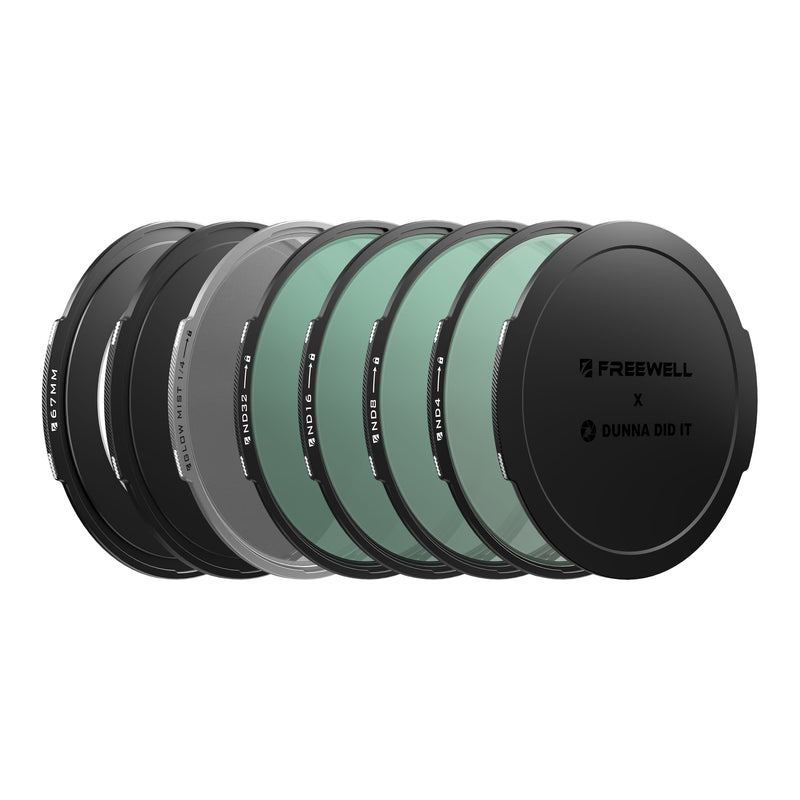
Stabilization controls camera shake; ND controls exposure. Bright daylight still forces a compromise on shutter speed and aperture unless you cut light at the lens. Many compact RF zooms and primes use 67mm threads, while larger RF L glass often wants an 82mm magnetic system. Pair the body with a filter kit that matches the lens you shoot most.
FOR LIGHT CONTROL
Dunna Videography Filter Kit
Magnetic 67mm stepped ND kit for RF 24-50 and RF 24-105 daylight video.
VIEW DUNNA KIT ↗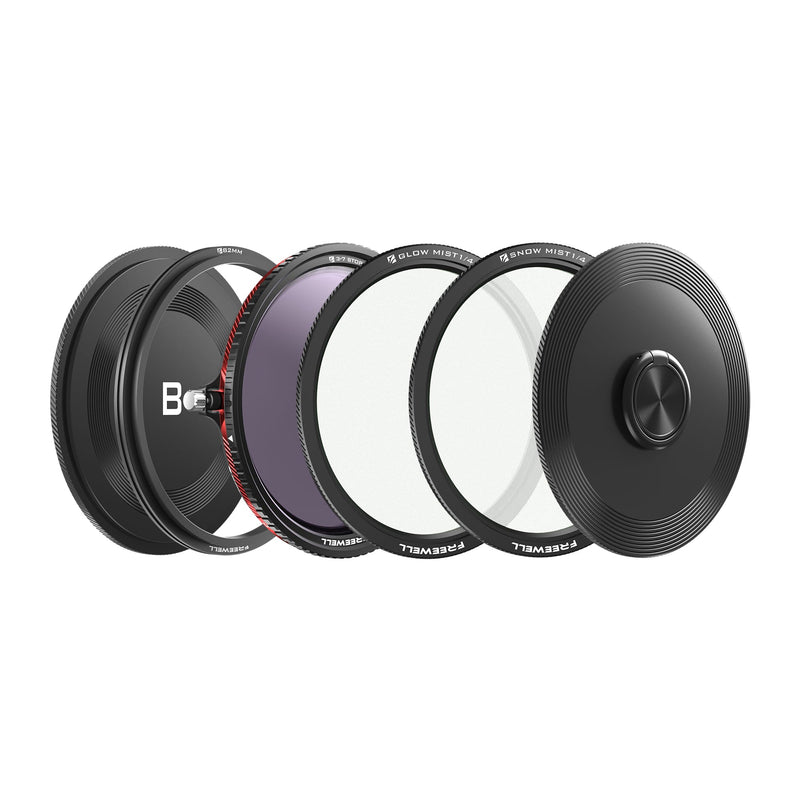
FOR RF L GLASS
V2 Hybrid VND/CPL Pro Kit
3-7 stop VND plus CPL on 82mm, with optional Glow Mist for interviews.
VIEW VND / CPL ↗
Who is the EOS R8 Mark II for?
Canon is aiming at advanced hobbyists, travel hybrids, and creators who want full-frame depth without an R6-sized kit. It fits if you:
- Need a compact full-frame A/B camera that can go handheld without a gimbal on every job.
- Already own RF glass (especially non-IS primes) and felt the original R8’s missing IBIS.
- Want Dual Pixel AF, oversampled 4K60, and Canon color in a body under about 550 g.
- Can live with a single card slot, micro HDMI, and the small LP-E17 battery for run-and-gun days.
It is a weaker fit if you need dual cards, full-size HDMI, mechanical shutter reliability for certain flash/flicker work, open gate, or internal RAW. That short list points toward the R6 Mark II / Mark III family instead.
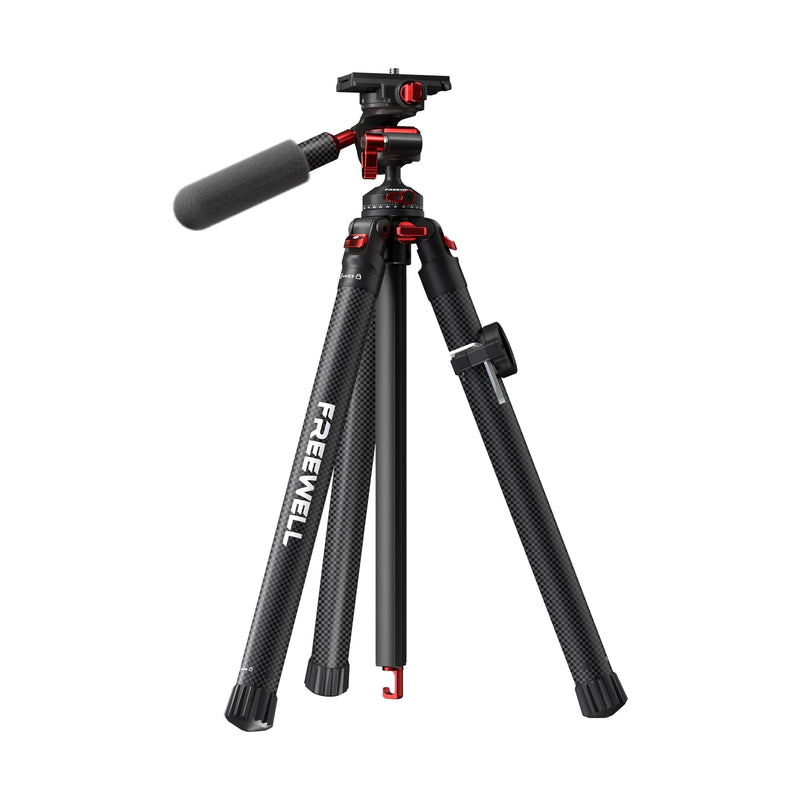
Either way, readers buying this body are usually shopping a whole travel kit: RF glass, a filter thread that matches the lens they use most, and a compact support for nights, interviews, and timelapse when IBIS is not the right tool. A fold-flat travel tripod pairs cleanly with a sub-550 g full-frame hybrid without undoing the point of a light body.
Should you wait or buy the R8 or R6 II instead?
Buy the R8 Mark II now if handheld hybrid video or non-IS primes were the reason you skipped the first R8, and $1,899 fits the budget. IBIS plus the joystick is the upgrade that changes how you shoot, not a firmware footnote.
Buy a discounted original R8 if you mostly work on a tripod or gimbal, already pair IS lenses, and want to save a few hundred dollars for glass. Same sensor class and same 4K60 ceiling; you give up body IS and the nicer 10-bit workflow defaults. Locked-off work still benefits from a travel-weight support; the same Real Travel Tripod covers long exposures and static A-roll whether the body has IBIS or not.
Stretch to an R6 Mark II (or newer R6-class body) if you need dual card slots, a more robust stills chassis, better battery endurance, or features the R8 line still omits. You will pay more and carry more, but the R8 Mark II is not trying to replace that tier.
Wait only if you specifically need open gate, internal RAW, or 4K120. Those are not coming to this body; they live higher in Canon’s lineup.
Bottom line: The R8 Mark II is the compact full-frame hybrid Canon should have shipped when people asked for IBIS on the R8. Same imaging DNA, steadier handheld footage, modern files, and a $400 jump over the original launch price. If that trade feels fair, it is shipping now.
Frequently asked questions