Category: Latest News

Stay ahead of the curve with updates on the newest drones, camera gear, tech innovations, and industry trends. From breakthrough releases to firmware updates and market insights, this category keeps you in the loop — whether you’re a filmmaker, photographer, or tech enthusiast.

  • DJI Mavic 4 Pro Leak Reveals Electronic ND Filter & Accessory Pricing

    DJI Mavic 4 Pro Leak Reveals Electronic ND Filter & Accessory Pricing

    DJI’s highly anticipated Mavic 4 Pro is inching closer to its official release, and as expected, leaks are starting to roll in. A new store listing, first reported by DroneXL and shared by Jasper Ellens, provides fresh insights into the electronic ND filter design and pricing of accessories.

    One of the biggest surprises? Unlike initial assumptions, the electronic ND filter won’t be integrated into the camera payload. Instead, it snaps onto the front of the massive camera system, similar to ND filters on previous DJI drones like the Mavic 3, Air 3, and Mini 4 Pro.

    In this post, we’ll break down the Mavic 4 Pro’s leaked electronic ND filter, accessory pricing, and expected release timeline.

    Mavic 4 Pro’s Electronic ND Filter: What’s New?

    The electronic ND filter is one of the most exciting features of the DJI Mavic 4 Pro. Early reports suggested it would be built directly into the camera system, much like professional cinema cameras. However, leaked images tell a different story.

    • The ND filter replaces the front section of the camera payload bulb, similar to past Mavic models.

    • A visible removable front section indicates a UV filter may be included in the default setup, protecting the three-camera system.

    Why an Electronic ND Filter?

    Neutral Density (ND) filters reduce the amount of light entering the camera, helping drone pilots achieve cinematic motion blur and proper exposure in bright conditions. An electronic ND filter adds an extra layer of convenience by allowing changes without physically swapping filters mid-flight.

    While the exact functionality of the Mavic 4 Pro’s electronic ND filter remains unclear, it’s an exciting upgrade that could streamline the shooting process for aerial cinematographers.

    Mavic 4 Pro Leaked Accessory Pricing

    dji mavic 4 pro
    Image Credit: @Quadro_News

    The leaked store listing also revealed the expected prices of various DJI Mavic 4 Pro accessories. While currency conversions may vary, here’s what we know so far:

    • Electronic ND Filter: $220

    • Intelligent Flight Battery: $180

    • Parallel Charging Hub: $100

    • Propellers: $19

    • Propeller Guard: $39

    • DJI Care Refresh (1-Year Plan): $225

    • DJI Care Refresh (2-Year Plan): $365

    These prices seem in line with previous DJI drone accessories, though final pricing will depend on region-specific factors.

    Given that the Mavic 4 Pro’s electronic ND filter snaps on instead of being integrated, Freewell will likely release alternative filters soon after launch. If you need an ND filter right away, the DJI version will likely be the best option on launch day. However, if you’re willing to wait, alternative filters could provide more flexibility at a better price.

    Mavic 4 Pro Release Date: When Can We Expect It?

    Jasper Ellens suggests that the Mavic 4 Pro release is just “weeks away”. With the increasing frequency of leaks, we can reasonably expect a launch no earlier than the last full week of April.

    Of course, DJI has not officially confirmed a release date, and delays can always happen. But based on past trends, an official announcement and pre-orders could open in late April or early May.

    Final Thoughts: What This Means for Mavic 4 Pro Buyers

    The DJI Mavic 4 Pro is shaping up to be a powerful new flagship drone, and leaks are giving us a sneak peek at what to expect:

    ✅ A snap-on electronic ND filter, rather than an integrated system.
    ✅ Modular design, allowing for third-party filter compatibility.
    ✅ Accessory pricing that falls in line with past DJI drones.
    ✅ A possible late April or early May release date.

    For drone enthusiasts and professional cinematographers, these leaks are promising. If you’ve been waiting for the Mavic 4 Pro, now is the time to start budgeting for accessories and DJI Care Refresh to protect your investment.

    What do you think about the electronic ND filter design? Would you prefer an integrated solution? Drop your thoughts in the comments below!

    Source Credit 1 & 2

  • GoPro Hero 13 Black Turns White: A Bold New Look

    GoPro Hero 13 Black Turns White: A Bold New Look

    The GoPro Hero13 Black just got a sleek makeover — introducing the limited-edition White version. Same top-tier performance, now in a bold, eye-catching design.

    After six generations of all-black models, GoPro has introduced a White version — and it’s getting a lot of attention.

    Why White? A Bold New Look with Practical Perks

    The new look isn’t just about style. It actually has some practical perks too:

    • Easier to spot: If you drop your GoPro on a trail or in the grass, the white version is easier to find than the black one.
    • Snow sports warning: If you’re into skiing or snowboarding, white might blend into snowy backgrounds. In that case, the black version may still be a better choice.
    • Modern style: The clean white design looks sleek, fresh, and different from the usual all-black cameras.

    Same Power, New Look

    The White version may look different, but it’s still packed with the same high-performance features:

    • 5.3K60 video for sharp, clear, and detailed footage.
    • Hyper Smooth 6.0 stabilization keeps your shots steady, even on bumpy rides or rough trails.
    • Type 1/1.9 CMOS sensor helps capture bright, colorful shots — even in low light.
    • Enduro battery lasts up to 1.5 hours of continuous recording in 5K 30p or 4K 30p.

    Price: The White version costs $400 — the same as the original black version.

    The GoPro You Know, Now in a Bold New Colour
    Image source: GoPro

    Boost Creativity with GoPro Lens Mods

    Want even more control over your shots? The White Hero13 Black works with GoPro’s HB-Series Lens Mods — perfect for getting creative:

    • Ultra-Wide Lens Mod: Captures more of the scene for an immersive, action-filled look.
    • Macro Lens Mod: Great for close-up shots with incredible detail.
    • Anamorphic Lens Mod: Gives you that cinematic, widescreen 21:9 look — just like the movies.
    • ND Filter Set: Helps balance brightness and exposure when shooting in sunny conditions.

    Plus, the Auto Detection feature automatically adjusts settings when you switch lenses — no manual setup required.

    Where to Buy the GoPro Hero13 White

    • The limited edition White Hero13 Black is available now for $400 on GoPro’s website — but since it’s a limited run, it might sell out fast.
    • Not ready to buy a whole new camera? You can still get the look with a white silicone sleeve and lanyard — also available in blue and black for more style options.
    • GoPro Hero13 White — same high-performance features in a fresh look.
    • The GoPro Hero13 Black is already a favorite for adventurers, athletes, creators, and travelers. Now, the White edition delivers the same powerful performance — with a fresh, bold style.
    • Whether you’re capturing an epic adventure, recording a vlog, or filming travel moments, the White Hero13 Black lets you stand out from the crowd — and makes it easier to find your camera if you drop it.
    • Same top performance. Sleek, limited-edition style. Why not grab one while you can?

    FAQs: GoPro Hero13 White Edition

    Q1: Is the  White version different from the black Hero13 Black?
    No — it’s the same camera, just with a new exterior color.

    Q2: Does the white version cost more?
    No — it’s priced at $400, just like the black version.

    Q3: Will the Polar White version be around forever?
    No — it’s a limited edition, so once it’s gone, it’s gone.

    Q4: Can I buy the white camera shell separately?
    Not exactly — but you can get a white silicone sleeve with a lanyard to dress up your current Hero13 Black.

    Would you pick the Polar White Hero13, or do you prefer the classic black version? Let’s talk in the comments!

  • Fujifilm GFX100RF vs X100V – A Comparison of the Latest Innovations

    Fujifilm GFX100RF vs X100V – A Comparison of the Latest Innovations

    Fujifilm has been a leader in the camera world with its unique and well-built designs, and their GFX100RF and X100V models are no exception. The GFX100RF is an exciting new release that shares some familiar elements with the X100V, but it also brings new challenges and advantages that make it a very different kind of camera.

    At first glance, the GFX100RF seems like an oversized X100V, borrowing many elements from the X100 series, but it’s clear from the start that the two are quite different in design and function. While the X100V is a compact, lightweight, and versatile camera designed for those looking for portability and ease of use, the GFX100RF is a much larger and more powerful system aimed at those seeking medium format quality with some unique features and compromises.

    Design and Build: A Familiar Look, But with Big Differences

    The GFX100RF instantly reminds you of the X100V with its sleek design. Both cameras share a similar form factor and classic feel, but the GFX100RF is noticeably larger and more substantial. The design is inspired by a rangefinder-style camera, with no optical viewfinder (OVF), which may surprise some users. This change, along with the absence of a built-in flash, makes the GFX100RF feel somewhat minimalist, especially compared to the X100V.

    The X100V is known for its optical viewfinder, which adds to its charm and versatility. However, the GFX100RF takes a more modern approach with a high-resolution digital display, which, while excellent, doesn’t quite match the tactile appeal of an OVF for those who are used to the X100 series. The GFX100RF is also equipped with tilt-up LCD, but it has a 3.15-inch screen which, though impressive, is a bit more limiting compared to the fully articulated screens on other modern cameras.

    Freewell Hybrid CPL/Glow Mist Filter for Fuji X100 Series | Cinematic Photography & Lens Protection

    The body of the GFX100RF is built with machined aluminum, offering more durability than the pressed metal of the X100V. Additionally, the lens mount of the GFX100RF is larger, as it supports a medium format sensor, which makes it considerably more challenging to integrate the same kind of lenses found in the X100V.

    Image Quality – Medium Format Meets Modern Needs

    The GFX100RF uses the same 102MP medium format sensor as the GFX100S, giving it an edge in image quality, especially for those looking for incredible resolution and dynamic range. However, the 35mm f4 lens that comes with the camera feels a bit restrictive, especially when compared to the faster lenses that can be paired with the X100V.

    While the X100V offers an f/2 lens, which excels in low-light conditions, the GFX100RF’s f/4 lens does not produce the same shallow depth of field or rich bokeh that enthusiasts might expect from a medium format camera. This makes the GFX100RF a great camera for those who need a versatile medium format experience but don’t necessarily need to get that creamy bokeh effect found in other high-end cameras.

    Considering lenses for the Fuji X100VI? Check this one out — it’s a perfect fit! Fuji X100VI/X100V Lens Pro Kit

    A key advantage of the GFX100RF is the ability to crop into the image, thanks to the medium format sensor. This allows users to effectively use digital teleconverters and crop the image to achieve focal lengths ranging from 45mm to 80mm, giving users great flexibility while still maintaining high image quality even after cropping. This is something that the X100V can’t replicate, as it relies on a fixed focal length.

    Performance and Usability – A New Way of Thinking

    One of the most intriguing features of the GFX100RF is its ability to shoot with raw sensor data, letting users crop or adjust their frame in post-production. While this is an exciting prospect for some photographers, it’s important to understand that the GFX100RF forces you to think differently about your shots. The idea of cropping in post can be a double-edged sword; while it offers flexibility, it can make you feel like you’re not fully utilizing the medium format sensor, and that might disappoint some users who are looking to maximize every pixel from that huge sensor.

    The X100V, on the other hand, keeps things simple with its fixed lens and beautiful optical viewfinder, designed for people who want great images with minimal setup. It’s intuitive and easy to use, with a more immediate shooting experience, while the GFX100RF requires you to embrace cropping and get used to the nuances of the sensor.

    fuji lens hood
    Fuji X100VI/X100V Lens Pro Kit

    Final Verdict – Which One Should You Choose?

    The Fujifilm GFX100RF and X100V are both incredible cameras, but they serve different purposes. The X100V is perfect for travel photographers or anyone who values a simple, lightweight camera with a fast lens and great image quality. It’s a classic, portable option that delivers fantastic results in a wide range of situations.

    The GFX100RF, on the other hand, is aimed at photographers who need medium format resolution and the flexibility to crop in post while maintaining stunning detail. While it doesn’t have the OVF of the X100V or the fast f/2 lens, it offers amazing flexibility and image quality, making it an excellent choice for serious photographers and those who are okay with a slightly different, more post-production-focused approach.

    At the end of the day, the choice between the GFX100RF and the X100V comes down to personal preferences. If you want portability and simplicity, go with the X100V. If you want power, flexibility, and incredible resolution, the GFX100RF might be the better choice.

  • Fujifilm GFX100RF: First Fixed-Lens Medium Format Camera Revealed

    Fujifilm GFX100RF: First Fixed-Lens Medium Format Camera Revealed

    The Fujifilm GFX100RF — a compact, street-friendly camera packed with a stunning 102-megapixel medium format sensor. Fujifilm has once again disrupted the camera market with an innovative fusion of its beloved X100 series and the GFX medium format lineup. The result? This blog dives into its key features, practical uses, and how it stacks up against competitors like the Leica Q3.

    Key Features of the Fujifilm GFX100RF

    The GFX100RF offers a unique blend of portability and high-end performance. Let’s break down the standout features:

    • 102-Megapixel Medium Format Sensor: Borrowed from the GFX100S II, this sensor delivers breathtaking image quality with rich dynamic range and detail.
    • Compact Body Design: Inspired by the X100 series, it features a sleek, retro design with fully machined aluminum top and bottom plates.
    • Fixed 35mm f/4 Lens: Equivalent to a 28mm field of view on full-frame, the lens ensures sharpness and versatility, though with a more modest aperture.
    • Knurled Control Dials: Classic Fujifilm dials for shutter speed, ISO, and aperture provide a tactile shooting experience.
    • Digital Crop Modes: Crop to 35mm, 50mm, or 63mm fields of view without sacrificing too much detail.
    • Multiple Aspect Ratios: Switch between 4:3, 3:2, 1:1, 16:9, and even cinematic 65:24 ratios.
    • Built-in 4-Stop ND Filter: Great for controlling light during daytime shoots or achieving creative long exposures.
    • High-Resolution EVF & LCD: A 5.76-million dot electronic viewfinder and a 2.1-million dot rear touchscreen ensure precise framing and playback.
    • Twin UHS-II SD Card Slots: Speedy storage and redundancy for peace of mind.
    • Fujifilm Film Simulations: All 20 classic modes are included for beautiful, ready-to-share JPEGs.

    PetaPixel recently covered this in an excellent video — watch below to hear their take and see the results firsthand.

    Source Credit: @petapixel. 

    Practical Uses: Where the GFX100RF Shines

    The GFX100RF isn’t your typical medium format camera — it’s built for versatility and creativity. Here’s where it thrives:

    • Street Photography: Compact and discreet with retro styling, it offers high-quality snaps on the go.
    • Landscape Photography: The 102-megapixel sensor and built-in ND filter are ideal for capturing detailed vistas.
    • Architecture: Sharp corners and minimal distortion make it perfect for shooting buildings and interiors.
    • Travel: Lightweight for a medium format camera, it’s a powerful travel companion.
    • Creative Portraiture: The crop modes and film simulations give a wide variety of looks.
    Everything You Need to Know About the GFX100RF
    What are the key features of the Fujifilm GFX100RF?

    The GFX100RF stands out with its 102-megapixel medium format sensor, compact X100-inspired body, fixed 35mm f/4 lens, classic Fujifilm controls, digital crop modes, built-in ND filter, high-resolution EVF, twin SD card slots, and access to 20 iconic Fujifilm Film Simulations.

    How does the autofocus perform on the GFX100RF?

    Autofocus on the GFX100RF is reliable in single-point mode, with accurate eye detection and solid performance in street and portrait scenarios. However, continuous autofocus and tracking are less impressive, especially in low light or fast-moving scenes — a known limitation of the GFX lineup.

    What are the video recording capabilities of the GFX100RF?

    While video isn’t its main strength, the GFX100RF offers 4K recording at 30p, F-Log, and F-Log2 for flexible grading, and Eterna Film Simulation for cinematic looks. It includes mic and headphone jacks for audio monitoring, but lacks in-body stabilization, which makes handheld shooting tricky without a tripod.

    How does the image quality compare to other cameras?

    The GFX100RF’s medium format sensor delivers stunning detail, dynamic range, and color rendition — easily outperforming full-frame rivals like the Leica Q3 in resolution and cropping flexibility. The fixed lens is clinically sharp, with excellent corner performance, though bokeh is less creamy due to the f/4 aperture.

    How does the GFX100RF compare to the Leica Q3?

    Here’s a quick breakdown of how the GFX100RF stacks up against the Leica Q3:

    Feature Fujifilm GFX100RF Leica Q3
    Sensor 102MP Medium Format 60MP Full Frame
    Lens Fixed 35mm f/4 Fixed 28mm f/1.7
    Weight Approx. 900g Approx. 743g
    Video 4K 30p, F-Log 8K 30p, 4K 60p
    Autofocus Single-point AF, Eye Detect Phase Detection AF, Eye/Face Tracking
    Built-in ND Filter Yes (4 stops) No
    Film Simulations 20 Modes Leica Looks Profiles
    Price Estimated Lower Higher Premium Price

    Fujifilm GFX100RF
    Image Credit: Fujifilm
    Final Thoughts: Is the GFX100RF Worth It?

    The Fujifilm GFX100RF breaks new ground by combining medium format quality with a street-shooter’s form factor. While it trades some perks — like a bright lens and in-body stabilization — for compactness and portability, it still delivers exceptional image quality and creative flexibility.

    Whether you’re a street photographer craving more resolution, a landscape enthusiast seeking breathtaking detail, or simply a Fujifilm fan drawn to its retro charm, the GFX100RF is a bold new contender in the premium camera market. It might not replace your go-to camera, but it’s sure to become a favorite companion.

    Would you take the GFX100RF on your next photography adventure? Let us know what you think!

    Image Credit.

  • DJI Osmo Pocket 3 Gets a Game-Changing Firmware Update!

    DJI Osmo Pocket 3 Gets a Game-Changing Firmware Update!

    Are you a vlogger, filmmaker, or just someone who loves capturing amazing videos? If so, DJI has just dropped a must-have firmware update (v01.06.08.04) for the DJI Osmo Pocket 3—and trust us, you’ll want to check this out! This update brings better zoom, smoother focus, and pro-level color enhancements. Let’s break it down!

    What’s New? Let’s Find Out!

    Q: Can I get closer to my subject without losing quality?

    A: Yes! Say hello to the brand-new Med-Tele Mode. With 2x mid-telephoto zoom at a 40mm focal length, you can now frame your shots more precisely—without sacrificing 4K ultra-HD quality. Unlike regular digital zoom that lowers resolution, this mode keeps all the crisp details intact. Just tap the <> icon in Video mode to activate it! Keep in mind that ISO maxes out at 1600, and ActiveTrack isn’t supported in this mode.

    Q: What about focus? Does this update make it better?

    A: Absolutely! DJI has introduced breathing compensation, a feature that makes focus transitions much smoother and more natural. No more weird distortions when shifting focus between subjects—your shots will look seamless and professional. This is a total game-changer for creators who love using focus pulls or tracking moving subjects!

    Q: I use my Osmo Pocket 3 as a webcam—anything exciting for me?

    A: Yes! If you’re live streaming, video conferencing, or filming content, D-Log M (10-bit) color is now available in Webcam Mode. This means wider dynamic range, richer colors, and more flexibility in editing. Your visuals will look incredibly vibrant and true to life.

    Q: Has the DJI Mimo app improved too?

    A: You bet! The DJI Mimo app (now version 2.2.2) has gotten some major usability boosts:

    • Background file downloads: No more waiting! Continue using the app while your content transfers.
    • Video screenshots: Capture frames from your videos as still images or live photos. (Feature availability depends on your device—Apple, Samsung, Xiaomi, vivo, and OPPO users, take note!).

    Q: Any other improvements I should know about?

    A: DJI has also squashed some bugs and fine-tuned overall stability and performance. This means a smoother, more reliable experience, so you can focus on creating, not troubleshooting!

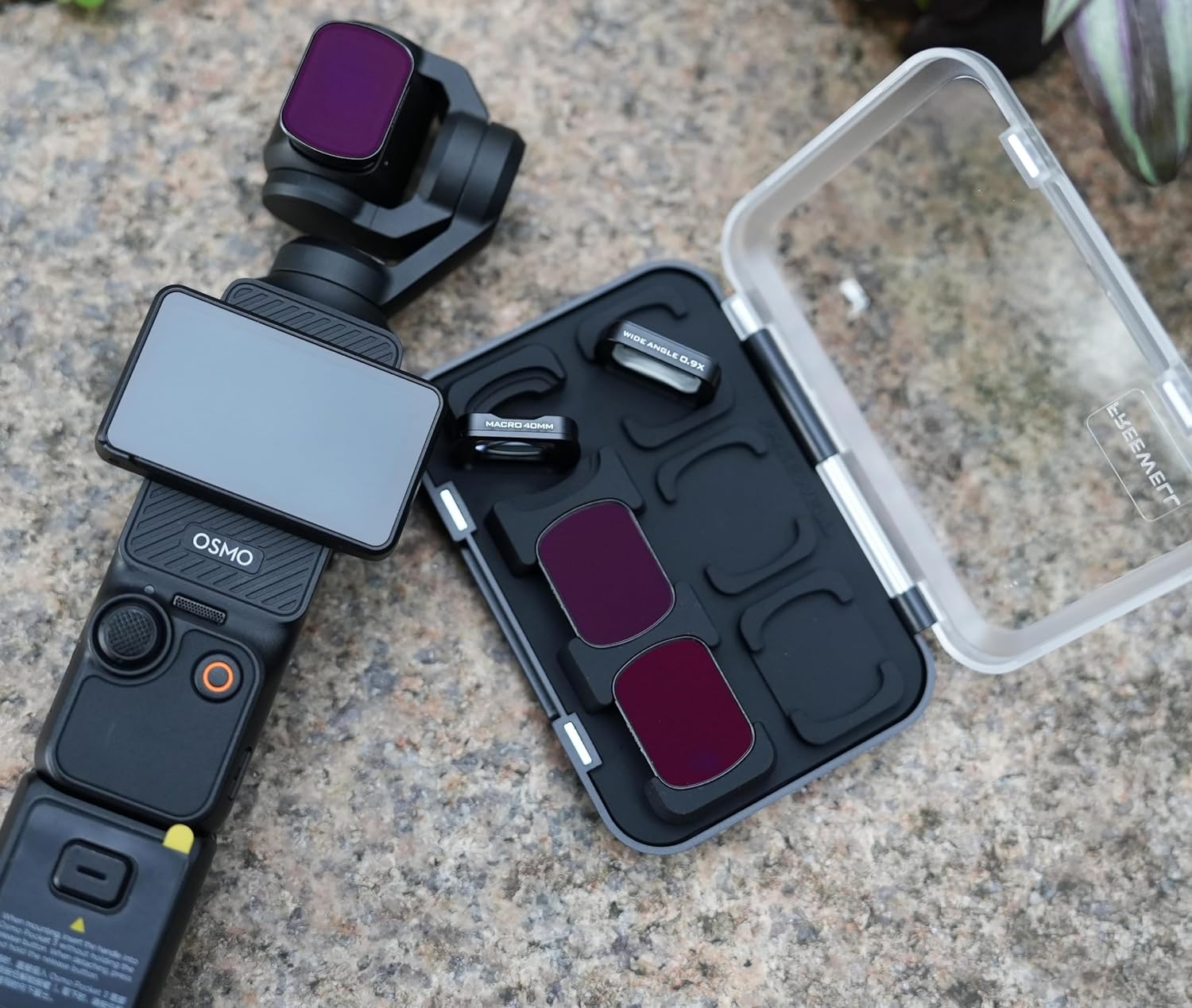
    Freewell offers a wide range of high-quality filters and lenses tailored to meet your needs. Lightweight, durable, and easy to use, these accessories are perfect for content creators looking to push the limits of their DJI Osmo Pocket 3 or other cameras.

    Freewell lenses and filters for the DJI Osmo Pocket 3 are like a wonderful pair of sunglasses for your camera. They enhance your view, reduce unwanted glare, and bring your shots into focus with crystal-clear precision. Whether you’re capturing vibrant landscapes or sharp close-ups, these accessories give your footage a professional touch, elevating the Osmo Pocket 3 to new creative heights.

    Final Thoughts: Is This Update Worth It?

    100% YES! This firmware update makes the Osmo Pocket 3 even more powerful, giving you better zoom, smoother focus, pro-level color options, and a more seamless app experience. If you haven’t updated your firmware yet, what are you waiting for? It’s time to unlock the full potential of your Pocket 3! 🚀

    Source Credit: 1

  • DJI Flip vs Osmo Pocket 3: A Comprehensive Comparison

    DJI Flip vs Osmo Pocket 3: A Comprehensive Comparison

    In the world of compact and powerful handheld cameras, DJI has become a leader with its innovative designs. Among their standout products are the DJI Flip and the Osmo Pocket 3, both catering to users who demand portability, ease of use, and superior video quality. Whether you’re a content creator, vlogger, or casual photographer, choosing between these two can be challenging. In this blog, we’ll compare the DJI Flip and Osmo Pocket 3 in terms of specifications, features, updates, and launch dates to help you make an informed decision.

    Launch Dates and Overview of DJI Flip and Osmo Pocket 3

    Feature DJI Flip Osmo Pocket 3
    Launch Date October 2024 September 2023
    Overview The newest addition to DJI’s portable cameras, designed for vloggers and content creators. It features a unique 180° flip design, ideal for front and rear-facing shots. The Osmo Pocket series, known for compact gimbal stabilization, continues with improved stabilization, camera quality, and a more intuitive interface, great for content creators.

    Design and Build of DJI Flip and Osmo Pocket 3

    Feature DJI Flip Osmo Pocket 3
    Size Ultra-compact with a flip-out display providing flexibility for different angles. Compact, measuring 121.9 x 36.9 x 30.0 mm, weighing around 300 grams.
    Build Sleek, lightweight design, weighing about 250 grams, making it easy to carry and use for extended periods. Sleek, ergonomic design with an integrated 3-axis gimbal for superior stabilization.
    Screen Full, rotating touchscreen allowing easy switching between selfie mode and wide-angle recording. Small touch display on the front for framing shots, plus a larger accessory screen option.
    Key Feature Unique “flip” design for versatile shooting angles, ideal for vloggers. 3-axis gimbal ensuring smooth footage, even in shaky environments, ideal for dynamic content creation.


    Camera Specifications of DJI Flip and Osmo Pocket 3

    Feature DJI Flip Osmo Pocket 3
    Sensor 1/1.7-inch CMOS sensor 1/1.3-inch CMOS sensor
    Resolution 4K video at 60 fps, 12 MP photos 4K video at 120 fps, 48 MP still photos
    Lens 24mm equivalent f/1.8 wide lens 20mm f/1.8 wide lens
    Stabilization Digital stabilization and EIS (Electronic Image Stabilization) 3-axis gimbal stabilization
    Field of View 150° wide-angle lens 80° field of view with distortion correction
    Additional Features 180° rotating screen, real-time tracking, advanced face and object recognition Enhanced gimbal stabilization, ActiveTrack 5.0, dual screens with customizable shooting modes

    Battery and Charging of DJI Flip and Osmo Pocket 3

    Feature DJI Flip Osmo Pocket 3
    Battery Life 2 hours of continuous recording at 4K Approximately 2.5 hours of continuous 4K recording
    Charging USB-C port, fast charging available USB-C port for charging with fast charging support
    Battery Features Removable battery for easy swaps and extended shooting time Integrated battery with the option to purchase additional power modules for longer shoots

    Software and Features

    Feature DJI Flip Osmo Pocket 3
    Software Integrates with the DJI Mimo app for real-time editing and live streaming, with built-in AI features for face detection and tracking. Compatible with the DJI Mimo app, enabling automatic editing, stabilization adjustments, and sharing capabilities.
    Special Modes Hyperlapse, timelapse, and slow motion for creative content creation. ActiveTrack 5.0, Panorama, Time Lapse, Motionlapse, and Story Mode for automatic video effects.
    Live Streaming Live streaming to platforms like YouTube and Facebook with adjustable settings for resolution and frame rate. 4K live streaming with customizable settings for your preferred platform.

    Price and Value for Money

    Feature DJI Flip Osmo Pocket 3
    Price Range $399 $349
    Verdict Priced competitively for a compact camera with flip features, offering great value for vloggers and creators who prioritize ease of use and flexibility. Delivers exceptional gimbal stabilization and image quality at a lower price point, perfect for those seeking smooth video capture and stabilization.

    Updates and Future Prospects

    DJI Flip: As of now, the DJI Flip is still in its initial release phase. Future updates are expected to improve the software and add more advanced features, such as enhanced autofocus and improved video stabilization. DJI may also introduce additional accessories to further enhance its functionality.

    Osmo Pocket 3: The Osmo Pocket 3 has already received a firmware update that improves image quality and adds new features such as AI-powered tracking. DJI will likely continue refining the software and potentially offer new accessories, like microphone attachments, to boost audio quality for vlogs and podcasts.

    Which One Should You Choose?

    Go for the DJI Flip if:

    • You prioritize a versatile, flip-screen design for easy vlogging and front-facing shots.
    • You want a lightweight, compact camera with quick shooting options and decent stabilization.
    • You’re looking for a camera that’s perfect for social media content creation.

    Go for the Osmo Pocket 3 if:

    • You need superior stabilization for smooth, cinematic footage.
    • You want the best camera quality, with features like higher resolution photos and 4K at 120fps video.
    • You prefer a camera with a more traditional handheld design and enhanced gimbal performance.

    Conclusion

    Both the DJI Flip and Osmo Pocket 3 are fantastic options for content creators, but they cater to slightly different needs. The DJI Flip is a more flexible, user-friendly camera ideal for vloggers who need a quick, go-to solution with a flip-out screen. On the other hand, the Osmo Pocket 3 excels in delivering cinematic-quality videos with smooth stabilization and excellent image quality, making it a great choice for those seeking a premium experience. Whatever you choose, both cameras offer remarkable portability and performance, so you can’t go wrong with either option.

  • Drones: Will Next-Gen DJI Models Be Available in the US?

    Drones: Will Next-Gen DJI Models Be Available in the US?

    Drones are causing growing concern among enthusiasts, as the US could ban DJI’s latest models, potentially preventing access to the newest releases. With the third generation of DJI’s flagship camera drones, such as the Mini 4 Pro, Air 3S, and Mavic 3 Pro, coming to a close, the crucial question persists: will these advanced drones be available in the US market? As we approach the launch of DJI’s next-generation drones, uncertainty surrounds whether American consumers will have the opportunity to purchase them.

    Current Status of DJI Drones in the US

    Currently, there is no official ban on DJI drones in the US. Although there have been unverified reports of DJI drones encountering delays at customs, where some shipments are held for weeks before being cleared, no formal ban exists. However, a de facto ban is on the horizon. The Countering CCP Drones Act passed the House but failed to progress through the Senate. Despite this, DJI has been included in the National Defense Authorization Act for Fiscal Year 2025, which requires a national security agency to assess the risk posed by Chinese-made drones, including those from DJI. If this risk assessment isn’t completed within one year, any new drones, including future DJI releases, will automatically be banned.

    The DJI Drones

    As we look toward the future of drone technology, DJI continues to reign as the leader in the aerial photography and flying camera market. 2025 promises to be an exciting year for drone enthusiasts, with several new models and upgraded versions of existing favorites expected to launch. But before we dive into what’s next, let’s take a look at some of the standout current DJI drones that are still making waves, including the DJI Neo, DJI Flip, and DJI Air 3S, as they provide a great foundation for the innovations to come.

    DJI Neo Drones: Affordable and Powerful

    The DJI Neo series has carved out a niche for itself as a budget-friendly option for drone enthusiasts who want to experience high-quality aerial shots without breaking the bank. With its compact design and impressive camera capabilities, the DJI Neo is ideal for those just starting out or hobbyists who want an easy-to-fly drone with solid performance.

    Looking ahead to 2025, it’s likely that the DJI Neo series will receive incremental upgrades to keep it competitive in the growing budget drone market. Expect improved cameras, longer flight times, and more refined stabilization features. As drone technology continues to advance, the DJI Neo will likely evolve to offer even more value for beginner and casual pilots looking to take stunning aerial shots at an affordable price.

    DJI Flip Drones: The Beginner-Friendly Option

    For those new to drone flying, the DJI Flip offers an excellent entry point into the world of aerial photography. With its simple controls and lightweight build, it’s designed for beginner pilots who want a stress-free flying experience. The Flip series is all about ease of use, making it a fantastic option for those who are just getting started but still want a quality drone.

    As we move into 2025, the DJI Flip is likely to see minor upgrades to enhance its user-friendliness, such as better battery life, improved flight stability, and even more intuitive control systems. Though not as feature-rich as the higher-end drones, the DJI Flip will remain a solid choice for those looking for a budget-friendly, easy-to-fly drone with reliable performance.

    DJI Air 3S Drones: The Mid-Range Powerhouse

    The DJI Air 3S is one of the best mid-range drones on the market, offering professional-grade features in a compact, portable design. Known for its advanced camera capabilities, the Air 3S allows pilots to capture stunning 4K footage while enjoying a smooth flight experience. As one of DJI’s top-selling drones, it strikes the perfect balance between performance and price, making it a popular choice for drone enthusiasts and content creators alike.

    Freewell Filters for DJI Air 3S Drones
    Freewell Filters for DJI Air 3S Drones

    Looking ahead to 2025, DJI will likely build upon the success of the Air 3S with further advancements in camera technology, flight stability, and intelligent flight modes. Improvements in autonomous flying capabilities and better obstacle avoidance sensors are expected, making the DJI Air 3S a more reliable and versatile option for both professional photographers and hobbyists. It’s safe to say that the Air 3S will remain a flagship model in DJI’s lineup for the next few years, with significant upgrades to keep it competitive in the growing drone market.

    What Does This Mean for Upcoming DJI Drones?

    Let’s break down the potential of DJI’s next-generation drones making it to US shelves before that 2025 deadline:

    1. DJI Mavic 4 Pro drones – Leaks about DJI’s fourth-generation flagship camera drone, the Mavic 4 Pro, have been emerging consistently. The drone has already been spotted in the FCC database, and with a tentative release slated for this spring, it’s almost guaranteed to reach the US market. All that’s left is the official release announcement.

    2. DJI Air 4 drones– Early leaks have shown glimpses of the Air 4, although it’s still in the initial stages of development. While an official release date hasn’t been confirmed, it could potentially launch by late 2025, just ahead of the deadline. Although not certain, there’s a strong possibility that the Air 4 will make its way to the US by the end of the year.

    3. DJI Mini 5 Pro drones – The Mini 3 Pro, released in 2022, has gained significant popularity for its outstanding performance and budget-friendly price. Although there have been no major leaks regarding a Mini 5 Pro, it’s possible that DJI will introduce a new Mini drone sometime in 2025. Considering the success of the Mini series, it’s highly likely that a new version will be launched before the year ends.

    4. DJI Neo 2 or Flip 2 drones– The Neo and Flip series are designed for beginner pilots and those on a budget. Although DJI may eventually release second-generation versions, there is no indication that these drones will be available in the near future. With no leaks or official statements to go on, it’s premature to make any predictions about the future of these models.

    Drones: Countdown to December 2025 – What to Expect?

    DJI enthusiasts in the US are eagerly awaiting the arrival of new drones. Although the threat of a de facto ban remains, there’s still ample time for fresh releases—particularly if DJI can navigate any obstacles. With the Mavic 4 Pro and possibly the Air 4 on the way, drones in the upcoming year hold exciting potential for fans in the US. Keep an eye out for updates as we closely follow the situation and monitor the latest drone launches.

    Source Credit 1 & 2

  • Is DJI Flip an Upgrade to DJI Neo?

    Is DJI Flip an Upgrade to DJI Neo?

    The drone industry continues to evolve at an impressive pace, with DJI consistently leading the charge. Two of their recent innovations, the DJI Neo and the DJI Flip, have captured the attention of drone enthusiasts worldwide. While both drones have their unique features and strengths, the question on everyone’s mind is: Is the DJI Flip truly an upgrade to the DJI Neo? Let’s break it down.

    A Quick Look at the DJI Neo

    The DJI Neo was introduced as a compact and highly innovative drone tailored for creators on the go. With a focus on portability and cinematic content creation, the Neo was designed to meet the needs of both amateur and professional drone users. Key highlights of the Neo include:

    • Compact Design: Small enough to fit in your backpack, making it ideal for travel.
    • Stunning Video Quality: Equipped with advanced stabilization and video resolution for cinematic shots.
    • Integration with Freewell Filters: The Neo’s compatibility with Freewell’s range of filters made it a favorite among content creators aiming for precise control over exposure and creative effects.
    • Ease of Use: A user-friendly interface that allowed even beginners to capture professional-quality footage.

    The Neo became a reliable companion for creators looking to elevate their visual storytelling without the burden of carrying bulky equipment.

    Enter the DJI Flip

    Building on the success of the Neo, the DJI Flip takes things to the next level with cutting-edge features and upgrades designed for modern-day creators. Here’s what sets the Flip apart:

    • Innovative Foldable Design: True to its name, the Flip features a sleek, foldable design that enhances portability even further.
    • Improved Camera Performance: The Flip boasts a next-generation camera system with higher resolution, better dynamic range, and superior low-light performance.
    • Extended Battery Life: A significant improvement in flight time, ensuring longer sessions without frequent recharging.
    • Enhanced Stability: Thanks to advanced gimbal technology, the Flip delivers even smoother footage, making it ideal for professional use.
    • Smart Flight Features: With upgraded obstacle avoidance and intelligent flight modes, the Flip provides a more seamless and worry-free flying experience.
    Feature DJI Neo DJI Flip
    Portability Compact and travel-friendly Foldable design for even greater ease
    Camera Quality Advanced stabilization, cinematic visuals Higher resolution, better dynamic range
    Battery Life Standard flight time Extended flight time
    Stability Reliable stabilization Superior gimbal technology
    Smart Features Basic obstacle avoidance Upgraded obstacle detection, smart modes
    dji neo filters
    DJI Neo ND Filters

    The Verdict: Is the Flip an Upgrade?

    While the DJI Flip introduces several impressive upgrades over the Neo, whether it’s an upgrade for you depends on your specific needs as a creator. Here’s how to decide:

    • Choose the DJI Neo if: You’re looking for an affordable, lightweight, and beginner-friendly drone that still delivers professional-quality footage. The Neo is perfect for casual creators and travelers.
    • Choose the DJI Flip if: You want the latest technology, better camera performance, and advanced features for professional-grade projects. The Flip is ideal for creators who need a reliable, high-performance drone for demanding shoots.
    dji flip
    Image Credit: @JasperEllens

    The DJI Flip builds on the strong foundation laid by the DJI Neo, offering meaningful upgrades that cater to both amateur and professional creators. Whether you see it as an upgrade ultimately depends on how you plan to use it. One thing is certain: DJI continues to push the boundaries of what’s possible in drone technology, ensuring there’s something for everyone.

    What do you think? Is the DJI Flip an upgrade you’ve been waiting for? Let us know your thoughts in the comments below!

    SOURCE CREDIT! 1 & 2

  • DJI Flip Drone: Everything You Need to Know

    DJI Flip Drone: Everything You Need to Know

    DJI is renowned for its cutting-edge drones, catering to both recreational and professional users. Their lineup includes fan favorites like the DJI Air 2S, DJI Mavic Air 2, DJI Phantom 4 Pro V2.0, DJI Mini 3 Pro, and DJI Inspire 2. Now, the spotlight is on the DJI Flip, a rumored compact folding drone designed for beginners and casual users.

    What Makes the DJI Flip Unique?

    Leaked images and FCC filings suggest the DJI Flip is a game-changer, blending portability with performance. It features a downward-folding propeller design, diverging from DJI’s traditional side-folding mechanism. This innovation mirrors the Hover Air X1 and positions the Flip as a highly portable and beginner-friendly drone.

    Key Features of DJI Flip (Based on Leaks):

    Revolutionary Design and Portability:
    The downward-folding propellers enhance portability while integrated propeller guards improve safety, making it an excellent choice for new pilots.

    Camera with Three-Axis Gimbal:
    Equipped with a three-axis gimbal camera, the Flip is expected to deliver stable, high-resolution footage, catering to aspiring content creators.

    LiDAR-Based Obstacle Avoidance:
    Advanced LiDAR sensors, akin to those on the DJI Air 3S, promise enhanced obstacle detection and navigation.

    Battery Life of DJI Flip:
    A 3,110mAh battery is rumored to power the Flip, offering an impressive 34 minutes of flight time, surpassing similar models in its category.

    Transmission System:
    The DJI Flip is expected to support DJI’s OcuSync 4.0 (O4) video transmission system, ensuring a stable and reliable live feed.

    Hands-Free Quick Shots:
    Anticipated modes like Dronie, Rocket, Circle, Helix, Boomerang, and Spotlight make cinematic shots effortless, appealing to social media creators and vloggers.

    User-Friendly Features:
    Protective propeller guards, low noise levels, and intuitive controls make this drone ideal for beginners.

    dji flip
    Image Credit: JasperEllens

    Target Audience

    The DJI Flip is tailored to a broad audience:

    • Beginners will appreciate its compact, foldable design, safety features, and ease of use.
    • Content Creators will find its Quick Shot modes and three-axis gimbal invaluable for capturing stunning visuals.
    • Experienced Pilots can benefit from advanced LiDAR sensors, extended battery life, and reliable transmission systems, making it a capable backup drone for professional use.

    With a starting price of $439, the DJI Flip offers a compelling mix of features and affordability, appealing to both novice and seasoned drone enthusiasts.

    dji flip
    Image Credit: JasperEllens

    Pricing and Configurations

    The DJI Flip is rumored to be available in multiple configurations, each designed to meet different user needs:

    • Base Drone Unit: ~$460
    • RC 2 Controller Bundle: ~$670
    • Fly More Combo: ~$800

    This pricing positions the DJI Flip competitively within the consumer drone market, making it an accessible option for a wide range of users.

    Expected Availability

    The DJI Flip is anticipated to launch in mid-January 2025, potentially coinciding with CES 2025 in Las Vegas. The appearance of leaked accessory listings has heightened expectations for an official announcement soon.

    A Drone to Watch in 2025

    The DJI Flip is more than just a compact drone—it’s a versatile tool bridging the gap between beginner-friendly models and advanced drones. Its innovative design, impressive features, and competitive pricing have generated significant excitement in the drone community.

    As we await its official release, the DJI Flip is shaping up to be a must-have for anyone looking to explore the skies, capture stunning visuals, or simply enjoy the thrill of flying.

    Stay tuned for updates as DJI continues to redefine the drone landscape with the Flip!

    SOURCE CREDIT! 1 & 2

  • Exploring the Exciting Features of iPhone 17 Pro in 2025

    Exploring the Exciting Features of iPhone 17 Pro in 2025

    The tech world is abuzz with excitement as Apple gears up to release its latest flagship devices, including the iPhone 17 Pro and Pro Max. Packed with groundbreaking features, these models promise to set new standards in smartphone innovation. Here’s a breakdown of the key features that make the iPhone 17 Pro a must-have for tech enthusiasts and professionals alike.

    24MP Front-Facing Camera

    One of the most anticipated upgrades is the new 24MP front camera, a significant leap from the previous 12MP sensor. This improvement aims to provide clearer selfies and better quality for video calls, closing the gap between the front and rear cameras in terms of image quality.

    A19 Pro Chip for Unmatched Performance

    The iPhone 17 Pro will feature Apple’s latest A19 Pro chip, ensuring smooth performance and enhanced efficiency. With increased power, users can expect faster processing, better app performance, and seamless multitasking.

    Massive 12GB RAM

    Apple is pushing boundaries with a 50% increase in RAM, offering 12GB of memory. This upgrade is especially beneficial for users who rely on heavy multitasking, gaming, and AI-driven applications, making the device more future-proof.

    In-House Wi-Fi and Bluetooth Chip

    Apple’s shift towards self-developed chips continues with a new combo Wi-Fi and Bluetooth chip. This not only enhances connectivity but also reduces dependency on third-party solutions, offering a more streamlined experience.

    Larger Camera Bump

    The iPhone 17 Pro and Pro Max are expected to feature a larger rectangular camera bump, designed for optimized camera use. This change could bring improved photography and videography capabilities, supporting Apple’s focus on professional-grade content creation.

    Aluminum Frame Redesign

    In a surprising move, Apple has replaced titanium with aluminum for the frame of the iPhone 17 Pro models. This redesign may offer better durability while maintaining a sleek, premium look.

    Narrower Dynamic Island

    The iPhone 17 Pro Max takes customization a step further with a smaller Dynamic Island. This change, combined with potential Face ID integration directly into the display, creates a more seamless and immersive experience.

    Enhance Your iPhone Experience with Accessories

    iphone accessoriesTo fully maximize the potential of your iPhone 17 Pro, consider top-tier accessories like:

    With these exciting upgrades, the iPhone 17 Pro is set to redefine what a premium smartphone can do, blending cutting-edge technology with superior usability. Whether you’re a creative professional or a tech enthusiast, the iPhone 17 Pro offers an impressive array of features tailored to meet your needs.

    Image and Source Credit.