Short answer: For a small waterfall, Steve Austin lands on roughly 1/2 to 1 second. He locks one composition, sets a Freewell CPL to cut glare on wet rocks, then shoots from 1/500s to 4 seconds, adding an ND only when he needs a slower shutter. Longer is not always better: very long exposures can erase the water’s texture.
What the video covers
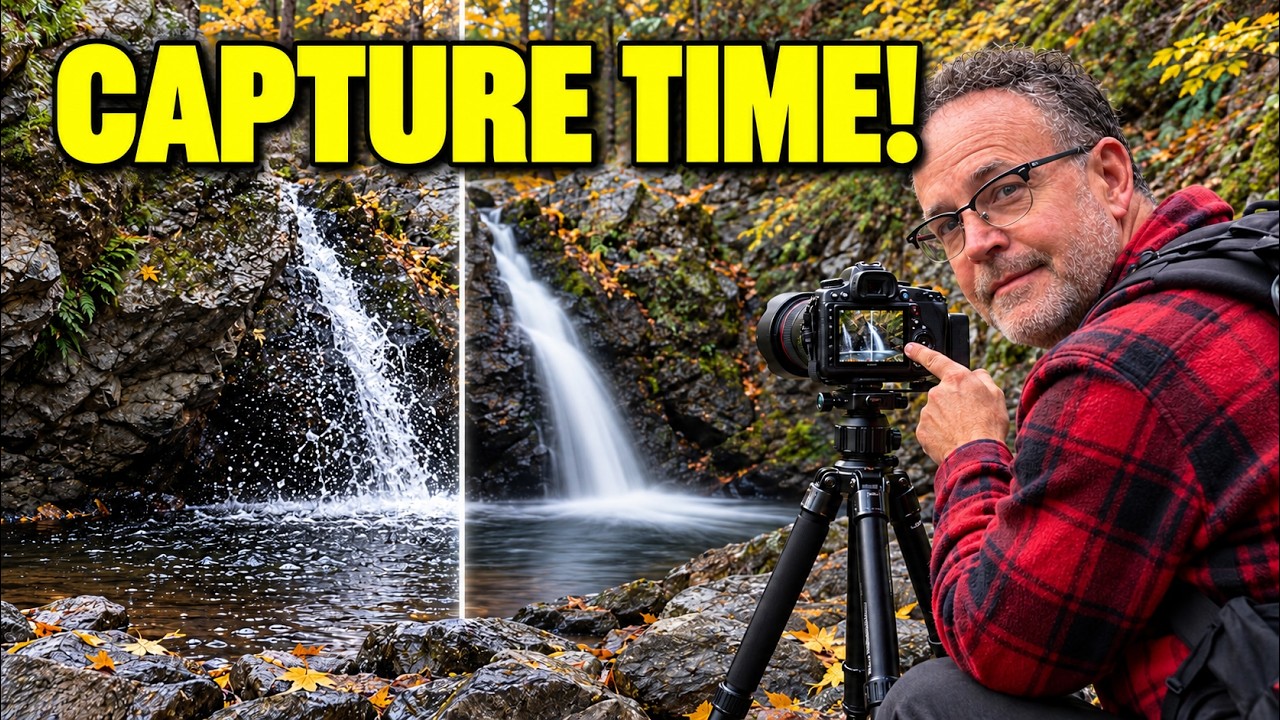
Steve Austin, a fine art landscape photographer, picks a quiet autumn cascade on purpose. Nothing dramatic, just moss, wet stones, a dark pool and a bit of falling water. He sets the tripod once and refuses to move it, so the only thing that changes between frames is how long the shutter stays open.
- CPL first. He fits the circular polarizer from his Freewell filter system and turns it slowly while watching the glare lift off the rocks and the pool. He stops before every reflection is gone, because some of them belong in the scene.
- 1/500s. Droplets freeze and the little fall looks busy and restless.
- 1/30s. The drops start to join into lines, so you can see which way the water moves.
- 1/4s to 1s. Smooth flow that still reads as water. This is the range he likes most for small falls.
- 2s to 4s. He adds a Freewell ND to keep ISO low. His point: the filter only cuts light, the shutter speed creates the look.
- Know when to stop. Pushing to 10 seconds on a small cascade turns it into a flat white ribbon, so he keeps an eye on the histogram to hold detail in the highlights.
It is a calm, practical lesson rather than a gear review, and it is a good one to watch before your next trip to a creek or waterfall.
Timestamps
Credit: Video by Steve Austin on YouTube, uploaded Oct 15, 2026. Watch the full video on YouTube and subscribe to Steve Austin for more.
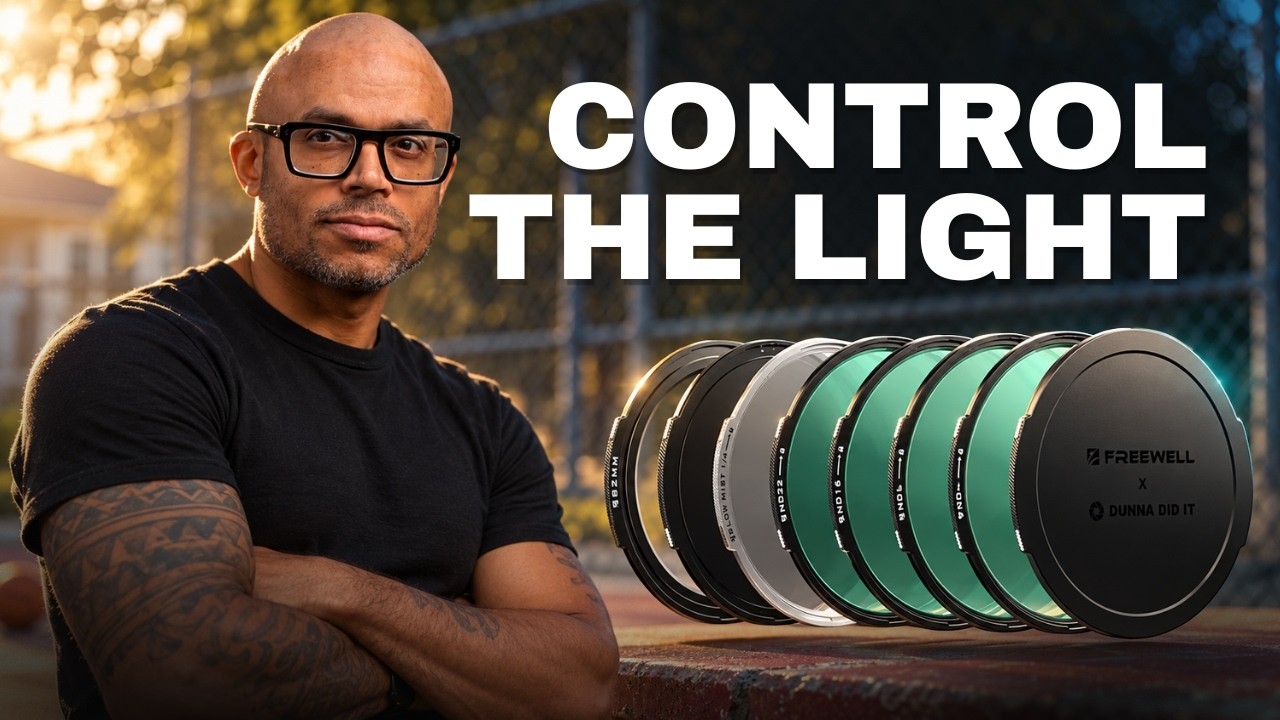
Building a similar CPL and ND setup for landscapes? The Freewell x Dunna Did It kit builder lets you pick a CPL and the ND strengths you need.