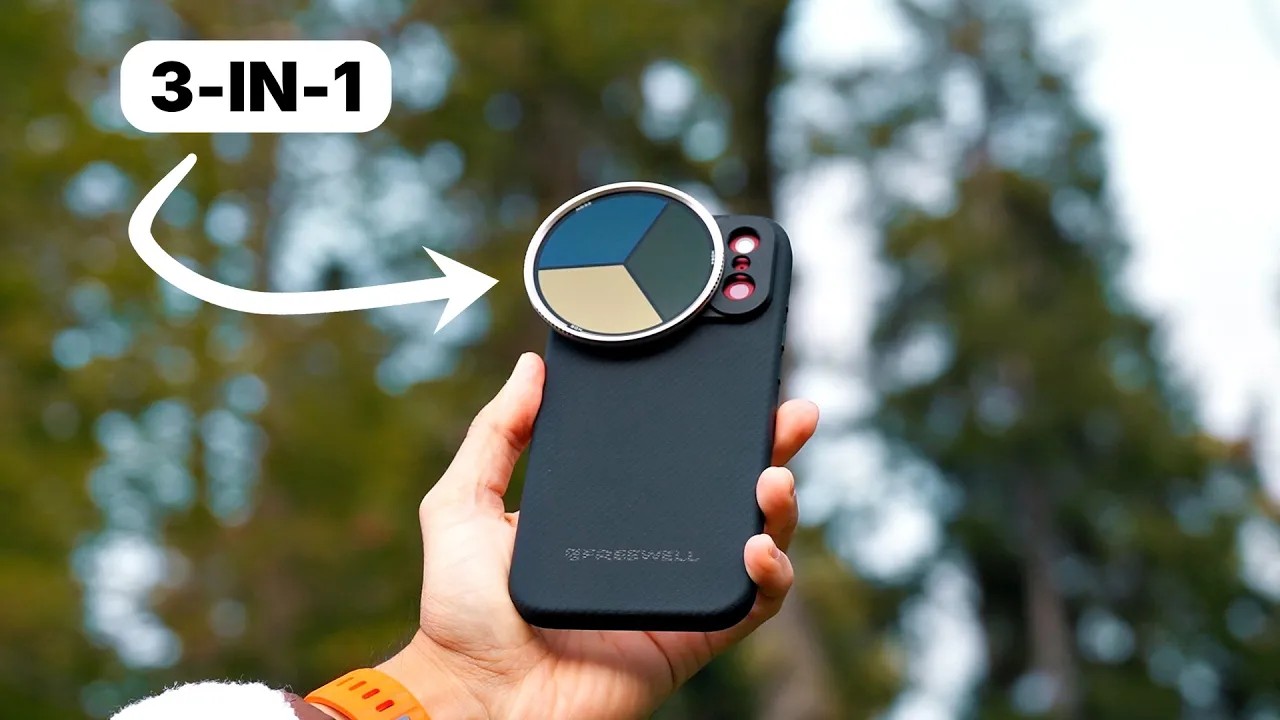
Direct answer: For most iPhone shooters, Benett Graezer thinks it is. The Freewell 3-in-1 ND puts ND8, ND32 and ND64 (3, 5 and 6 stops) on one magnetic filter, and you twist it to change strength. You get fixed-ND color accuracy without swapping filters. The catches: it only fits Freewell’s own iPhone cases and cage, and you can’t stack it with the 3-in-1 Mist. He tested both on the iPhone 18 Pro Max in Apple Log 2.
Video summary: what Benett Graezer shows
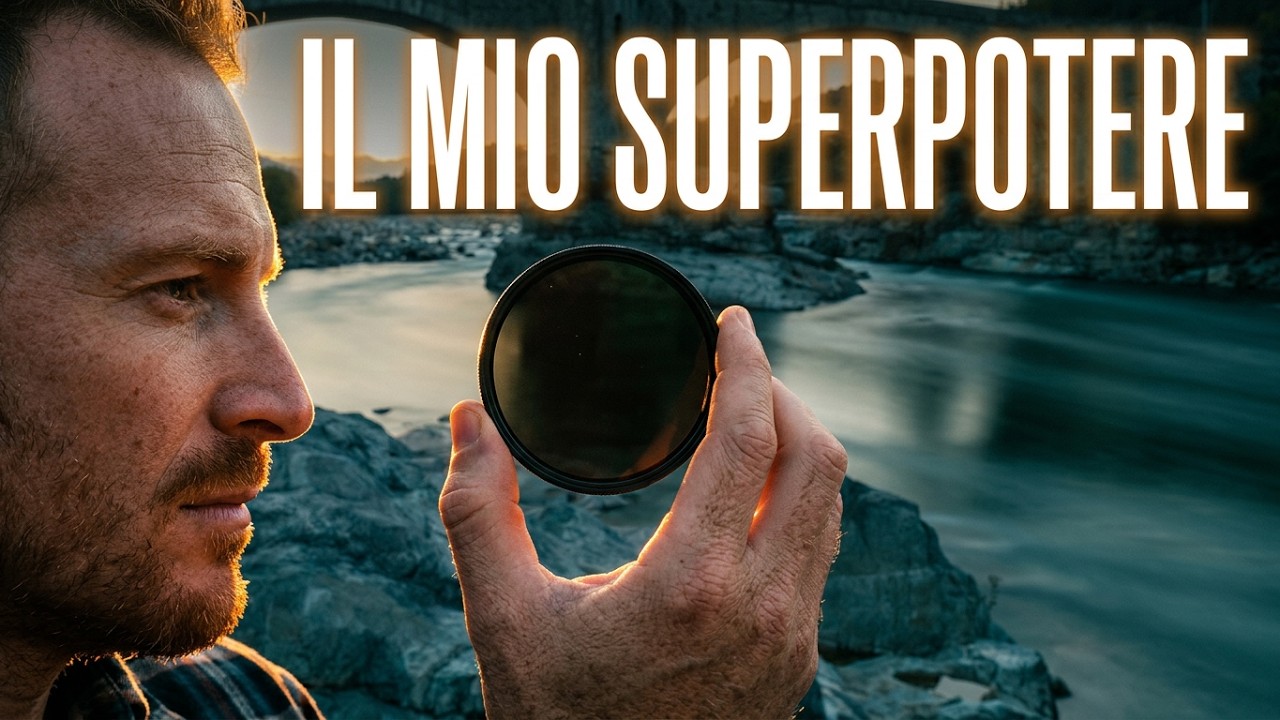
Benett Graezer, a smartphone filmmaking creator, has used many variable ND filters on iPhone and rates Freewell’s among the best. This was his first time trying the 3-in-1 magnetic filters. He says Freewell sent them for free, paid him nothing and gave him no script. He tested the iPhone 3-in-1 ND and the 3-in-1 Mist on an iPhone 18 Pro Max in Freewell’s Filmmaker Case.
The 3-in-1 ND is a fixed ND, not a VND. Its glass is split into ND8, ND32 and ND64 sections (3, 5 and 6 stops), and you change strength by rotating the two layers until the marked lines line up. His rule of thumb is ND8 for overcast, shade or late afternoon, ND32 for a normal bright day, and ND64 for harsh midday sun or bright scenes near water and snow. The magnetic hold stayed put when he shook the phone.
He explains why an iPhone needs an ND at all. In bright light the phone uses a very fast shutter, which makes motion look choppy. With an ND you can keep the shutter at about double your frame rate (1/50 at 25 fps) for natural motion blur. He adds that the iPhone 18 Pro Max’s variable aperture only gives you about three stops when you stop down to f/4, so a bright day still calls for an ND.
For the forest test he used the Blackmagic Camera app in Apple Log 2 at 25 fps and 1/50. It was late afternoon, so ND8 was enough. He found the colors accurate with no color cast to correct. He was also surprised by how thin, flat and light the filter is. The 3-in-1 Mist works the same way, with Gold, Noir and Snow diffusion all at 1/4 strength. They differ in the character of the glow, not its strength, and he liked Gold for daytime highlights.
His wrap-up covers the trade-offs. Swapping fixed NDs means digging in your pocket, and some VNDs show an X pattern, vignette at the edges, or don’t go dark enough. The 3-in-1 gives you fixed-ND quality and you just rotate for the next strength. Before you buy, he says to know three things: the filters only work with Freewell’s iPhone cases and cage, you can’t stack the ND and the Mist, and each was $79.99 when he filmed. That is easier to justify for three filters in one.
Key takeaways
Key takeaways
- Three strengths, one filter. ND8 / ND32 / ND64 (3, 5, 6 stops). Twist to line up the marks instead of swapping glass.
- Pick by light. ND8 for shade or late afternoon, ND32 for a bright day, ND64 for midday sun, water or snow.
- The 180-degree rule on iPhone. Shoot 25 fps at 1/50 (about double the frame rate). The ND is what lets you keep that shutter in daylight.
- Variable aperture isn’t enough. He notes that stopping the iPhone 18 Pro Max down to f/4 only gives about three stops, so you still need an ND outdoors.
- Clean color. In his Apple Log 2 forest footage the ND showed no color cast to fix.
- Know the limits. It only fits Freewell iPhone cases and the Genius Rig cage, and the ND and Mist can’t be stacked.
Who this video is for
Watch this if you
- film on an iPhone 18 Pro Max (or a Freewell-cased iPhone) in bright light
- want fixed-ND color quality without carrying several filters
- shoot Apple Log 2 and want natural motion blur at 1/50
Maybe skip it if you
- use a non-Freewell case and don’t want to switch
- need ND and Mist stacked at the same time
Timestamps
Freewell gear in the video

THE ND HE TESTED
iPhone 3 in 1 Magnetic ND Filter ND8/ND32/ND64
Twist between 3, 5 and 6 stops. Snaps onto Freewell iPhone cases and the Genius Rig Cage.
VIEW 3-IN-1 ND ↗
THE MIST HE TESTED
iPhone 3 in 1 Magnetic Mist Filter Gold/Noir/Snow 1/4
Three diffusion characters at 1/4 strength in one magnetic filter. He liked Gold for daytime highlights.
VIEW 3-IN-1 MIST ↗
REQUIRED MOUNT
iPhone 18 Pro Max Filmmaker Case
The case he films with. Its Sherpa magnetic mount is what the 3-in-1 filters attach to.
VIEW FILMMAKER CASE ↗Frequently asked questions
Is a 3-in-1 fixed ND better than a variable ND on iPhone?
Which ND strength should I use on iPhone?
Do I still need an ND filter with the iPhone 18 Pro Max variable aperture?
Does the Freewell 3-in-1 ND work with any iPhone case?
Can you stack the 3-in-1 ND and 3-in-1 Mist?
Credit: Video by Benett Graezer on YouTube, uploaded Oct 29, 2026. Watch the full video on YouTube and subscribe to Benett Graezer for more.