Blind test · Valencia, Spain
$1,300 phone.
$1,300 camera.
iPhone 18 Pro Max vs Sony ZV-E10 II, tested side by side for video, low light, background blur, stabilization and photos.
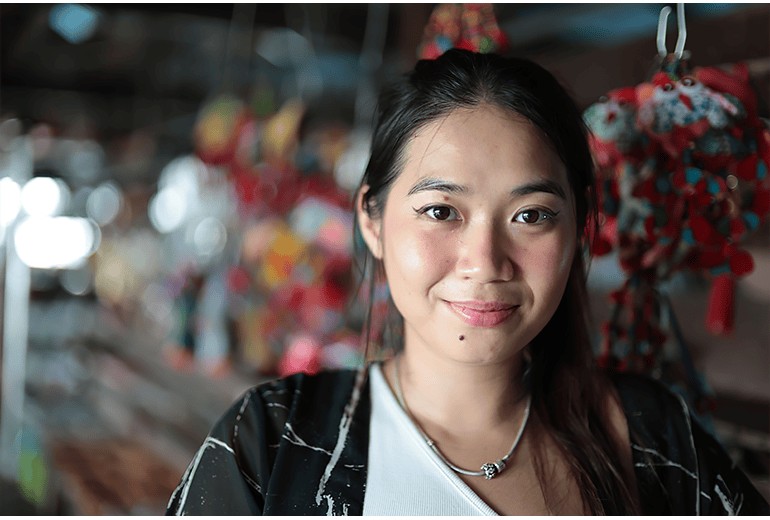
Two clips of Valencia’s Central Market play side by side. Same ornate tiled facade, same blue sky, same crowds drifting past the doors. One was shot on a $1,300 Sony mirrorless camera. The other came from a phone.
Can you tell which is which? At a glance, most people can’t.
That blind test opens our latest YouTube comparison, and it sets up the question a lot of you are asking right now: should you spend $1,300 on an iPhone 18 Pro Max, or on a Sony ZV-E10 II with its kit lens? We filmed both around Valencia, from the market at midday to the old town at night, to find out where each one actually wins.
Direct answer: For most creators, the iPhone 18 Pro Max beats a Sony ZV-E10 II with only its kit lens. The phone wins on zoom, stabilization, battery, and ease. Choose the Sony when you need a flip screen, real optical background blur, or cleaner low light with a fast lens. At the same $1,300 spend, lenses decide the camera.
Is an iPhone better than a mirrorless camera?
Not across the board, and that is the interesting part.
The iPhone 18 Pro Max won on stabilization, zoom range, battery life, heat and sheer convenience. In ProRes RAW it even out-resolved the Sony kit lens. The Sony ZV-E10 II fought back with natural background blur, cleaner low light texture once we added a fast lens, far better selfie video, and the freedom to swap lenses.
How do the iPhone 18 Pro Max and Sony ZV-E10 II compare on size and price?
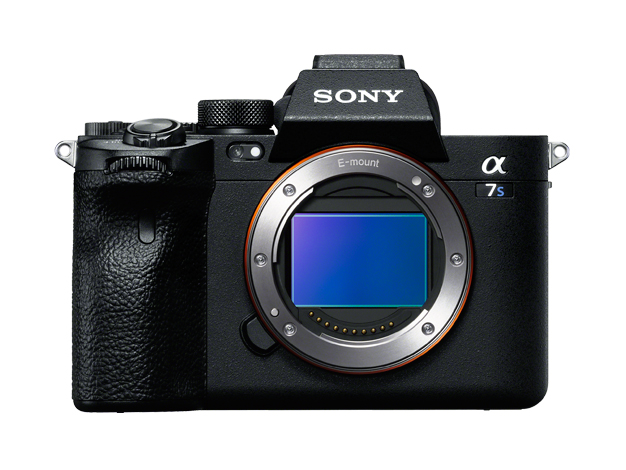
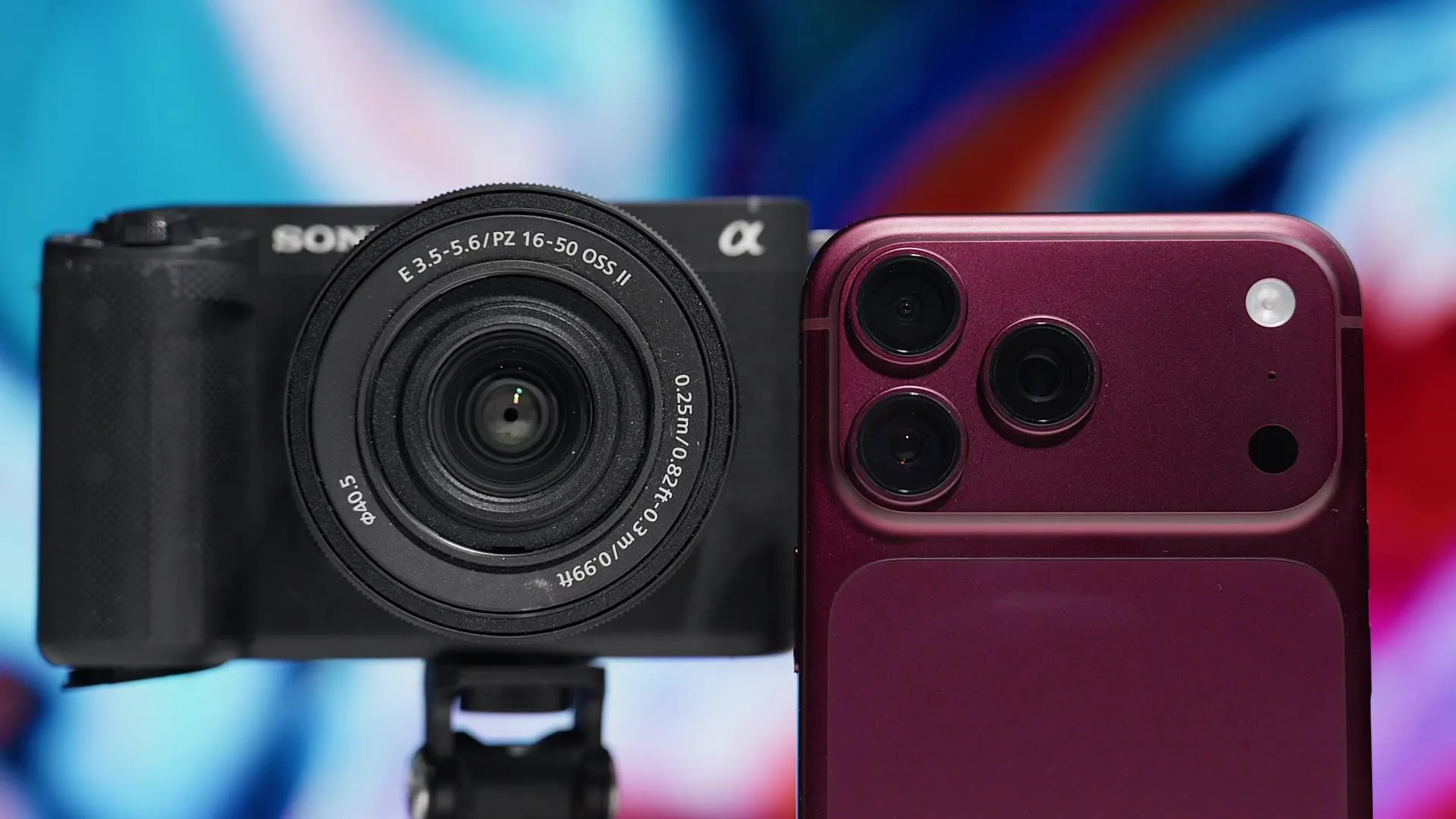
Pick them up together and the first surprise is how small the Sony is. With the kit lens on, it is only a little thicker than the phone and slips into a jacket pocket. It does weigh twice as much, about 500 g against 250 g.
Both cost about $1,300, but neither stays there. Log and ProRes files fill a 256GB iPhone fast, so we would buy 512GB. On the Sony, spend that money on a faster lens. The totals still end up close.
The phone
iPhone 18 Pro Max
- Price as tested
- About $1,300 (256GB)
- Weight
- About 250 g
- Lens range
- 0.5x to 8x
- Stabilization
- Excellent, plus Action Mode
- Log and RAW
- Apple Log 2, ProRes RAW
- Slow motion
- 4K 120 on 1x and 2x
- 4K per charge
- Around 8 hours
Wins onStabilization, zoom, battery, heat, open gate, convenience
The camera
Sony ZV-E10 II
- Price as tested
- About $1,300 with kit lens
- Weight
- About 500 g
- Lens range
- 16-50mm f/3.5-5.6, swappable
- Stabilization
- Lens only, gyro data for post
- Log
- S-Log3, 10-bit
- Slow motion
- 4K 120 with 1.5x crop
- 4K per battery
- Up to about 2 hours
Wins onBackground blur, low light with fast lenses, selfie video, lens choice
Which has better video quality?
Straight out of the camera, the footage is remarkably close. The iPhone pulls out a touch more detail, but you can see the sharpening on every edge. If you like that crisp look, you can add it to Sony footage in post. You cannot easily remove it from iPhone footage.
Apple Log 2 vs S-Log3: which has more dynamic range?
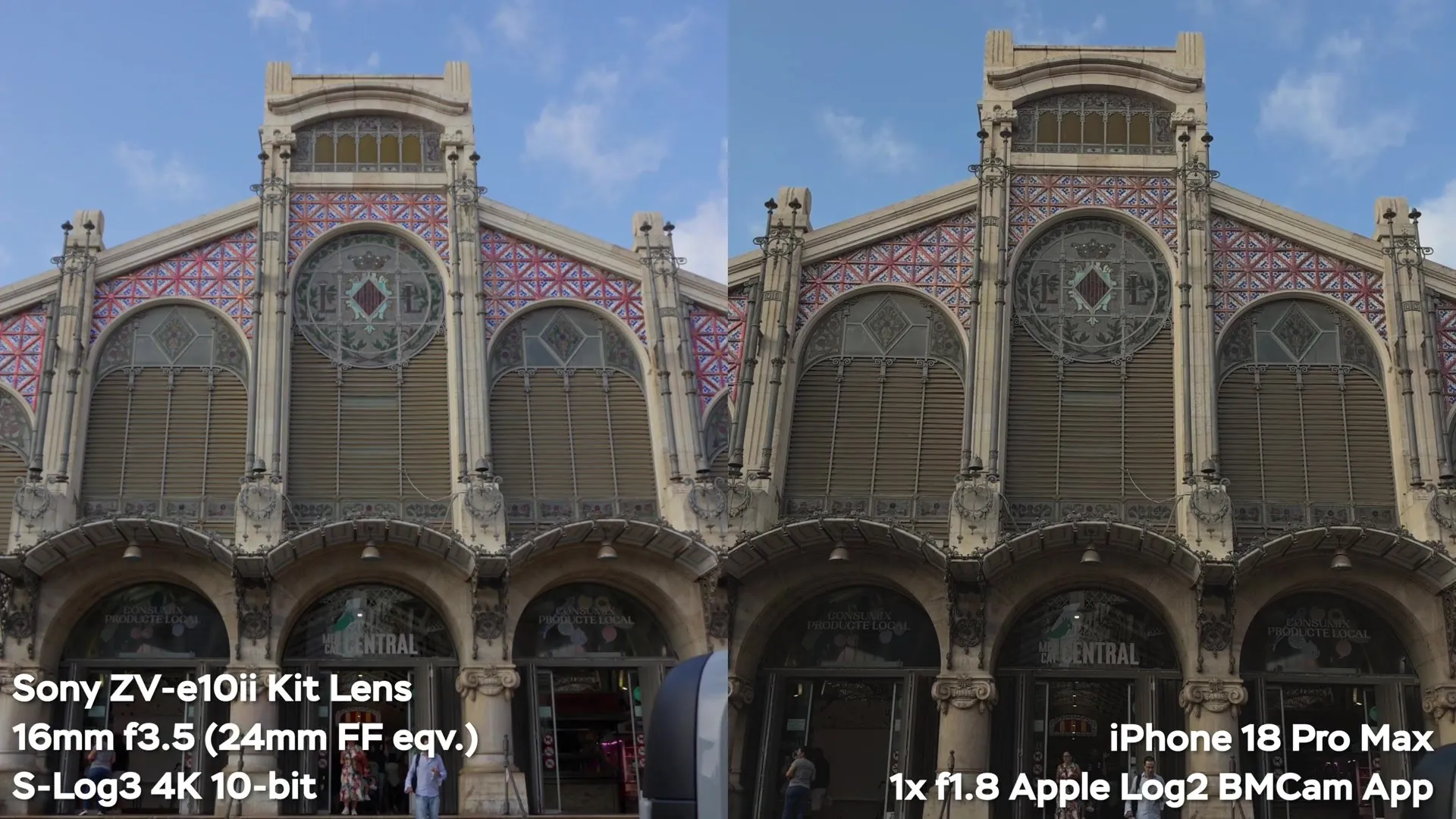
Call it a draw. We pointed both cameras at the market facade in bright sun, with deep shade under the trees and people walking in and out of it. Neither blew out the sky. Both held the shadows, with a little noise hiding in the darkest corners.
Where they split was sharpness. Shooting Apple Log 2 in the Blackmagic Camera app, the iPhone image simply looked crisper, because the Sony kit lens is soft.
Is ProRes RAW on the iPhone worth it?
If you care most about image quality, yes. This is the best footage the iPhone can produce, and some shots from our test genuinely look like they came off a cinema camera.
You also get control after the shoot. ISO, white balance, color noise and sharpening can all be changed in post. The catch is file size: ProRes RAW eats storage, so budget for more space or an external SSD.
Does the iPhone zoom beat a camera kit lens?
Against the 16-50mm kit lens, easily. The Sony lens covers about 24mm to 75mm equivalent and gets darker as you zoom, sliding from f/3.5 to f/5.6. The iPhone goes from a 0.5x ultra wide all the way to 8x. The range is a little crazy for something that fits in your hand.
We matched framing with the Sony at 50mm plus Clear Image Zoom (about 112mm equivalent) against the iPhone 4x camera. The kit lens looked soft. In ProRes RAW, the iPhone pulled so far ahead that the comparison stopped being close.
One more iPhone advantage: open gate. The Blackmagic Camera app records the full 4:3 sensor, so you can cut vertical and horizontal versions from one clip, or pair it with an anamorphic lens for a true widescreen look. The ZV-E10 II cannot do it. If you want that look after dark, lock exposure first in our iPhone night filmmaking guide.
Can an iPhone get real background blur?
Yes, and that is new. The iPhone 18 Pro Max has a physical aperture on its 1x camera that runs from f/1.48 to f/4. Wide open, you get genuine optical blur. Stop down and bright lights turn into crisp sunstars.
The Sony still separates subjects better, even with the kit lens, and its out-of-focus areas look softer. Next to it, the iPhone background feels a little busy. Cinematic mode fakes the rest convincingly, though stray hairs still give it away.
Then we mounted a Sigma 17-40mm f/1.8 on the Sony, and the gap turned into a canyon. That lens costs around $900, close to the price of the camera. If that stings, compact primes like the Viltrox Air series run about $170 to $200 each.
Do you need ND filters for cinematic video?
If you want motion to look like a movie, yes. On a kit-lens mirrorless body the same shutter math shows up in our Nikon Z5IIC video settings guide.
The rule of thumb is a shutter speed about double your frame rate, so 1/50 at 25 fps. On a bright Spanish afternoon, that much open shutter lets in far too much light. An ND filter brings it back under control. For the iris-vs-ND question on the new iPhone, see our iPhone 18 Pro variable aperture guide. For the wider filter basics, read ND Filters for Camera: Everything You Need to Know.
Watch the waving hand in front of the souvenir shop below. The Sony kit lens has a tiny 40.5mm thread and we had no adapter, so it was stuck at 1/400. Every finger is frozen and the motion stutters. The iPhone wore our iPhone 3 in 1 Magnetic ND Filter at ND64, shot at 1/50, and the hand moves with that soft, natural blur your eye expects.
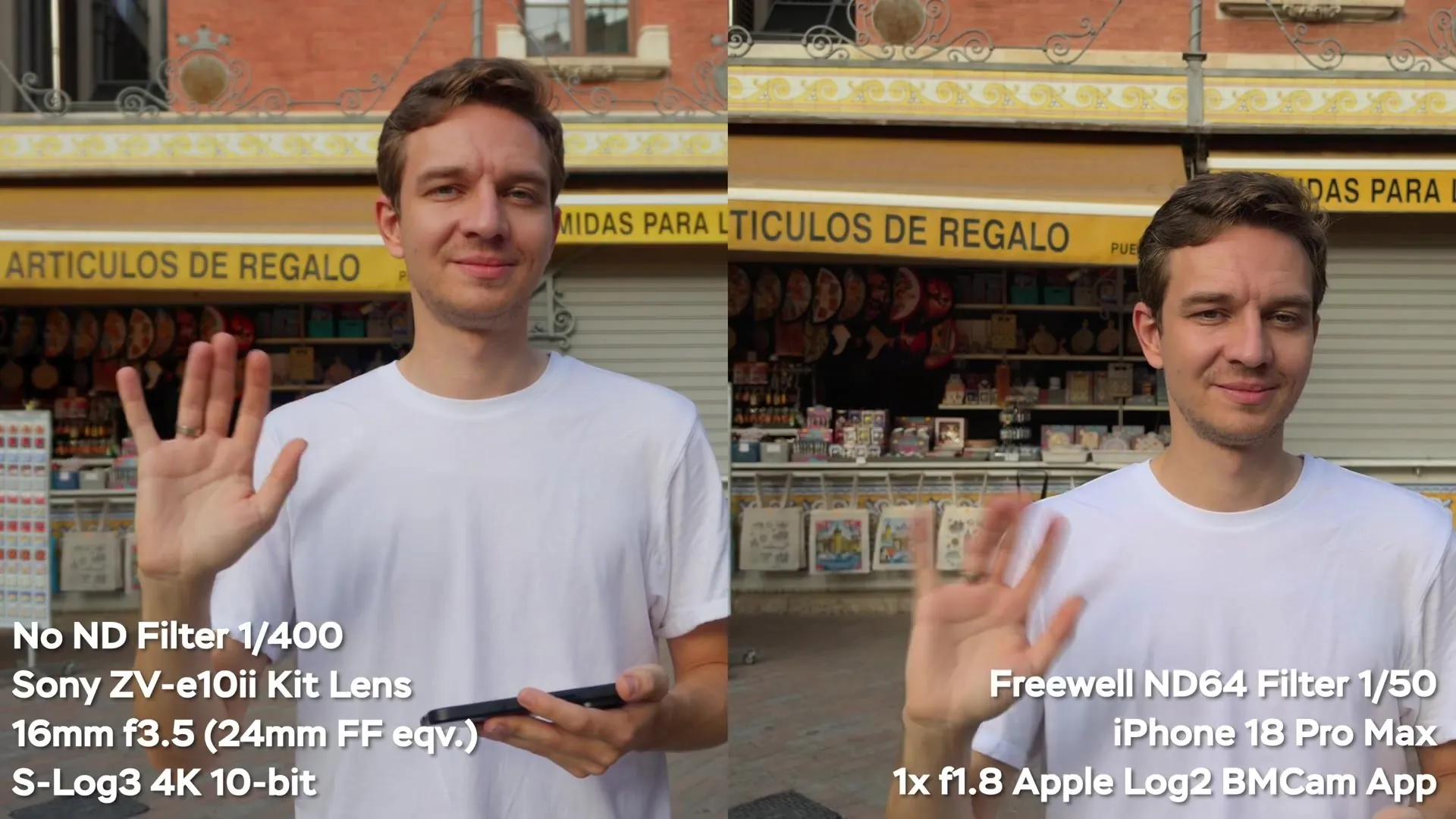
Later we gave the Sony a fair fight. With the Sigma f/1.8 lens and the Freewell Real Locking VND/CPL Filter All Day Kit, we could shoot wide open in full sun and still hit 1/50.
How to set up an ND filter on your iPhone
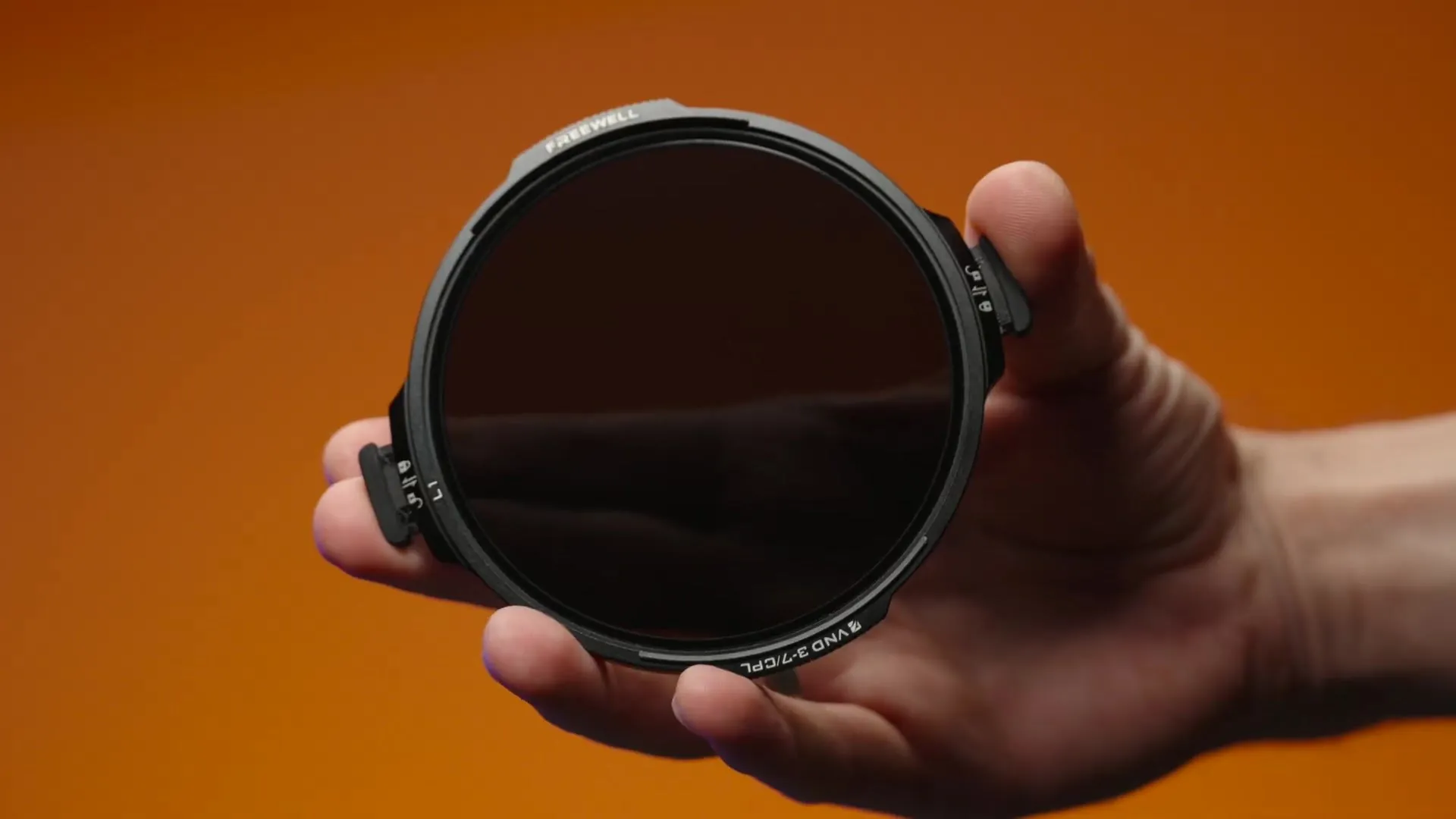
On the iPhone it takes seconds. The filter snaps onto the magnetic mount of the iPhone 18 Pro Max Filmmaker Case, and you choose the strength that fits the light.
Prefer one smooth dial instead of fixed strengths? The VND 1-5 stop in the iPhone 18 Pro Filmmaker Basic Kit adjusts with a twist.
Which has better stabilization?
The iPhone, and it isn’t close.
The ZV-E10 II has no stabilization in the body. It leans on the lens, and our walking shots came out wobbly. The iPhone 1x camera looked remarkably smooth by comparison. Switch on Action Mode (2.8K with a heavy crop) and you can run down the street and keep usable footage.
The Sony’s hidden card is gyro data. Stabilize clips later in Gyroflow or Sony Catalyst Browse and the results are impressive, at the cost of a crop and extra editing time.
Which wins on autofocus, slow motion and time-lapse?
You would expect a Sony to own autofocus. With the kit lens, it didn’t. At times the iPhone locked on faster, and tap-to-track held onto the subject even after they walked out of frame and back in.
Both shoot 4K at 120 fps for slow motion, but the Sony adds a 1.5x crop and a bit more noise. For time-lapses, skip the iPhone stock app, which keeps nudging the exposure and causes flicker. The Blackmagic Camera app with manual settings fixes it.
Is an iPhone or a camera better for vlogging and YouTube?
Turn the cameras around and the Sony takes over. Its flip-out screen lets you frame yourself with the main sensor, and next to the iPhone front camera the difference is obvious, especially after dark.
To vlog with the iPhone’s better rear cameras, you need a way to see yourself. An Apple Watch works, or a second phone running the Blackmagic Camera remote. In the video, we used an older iPhone in a Freewell case to monitor the shot and even change the aperture remotely.
In a busy Valencia square, both built-in mics were fine. A wireless mic is the real upgrade on either, and most plug straight into the iPhone USB-C port. For sit-down videos, The Real Travel Tripod holds either camera.
Is the iPhone 18 Pro Max better in low light?
It depends on the lens you put on the camera.
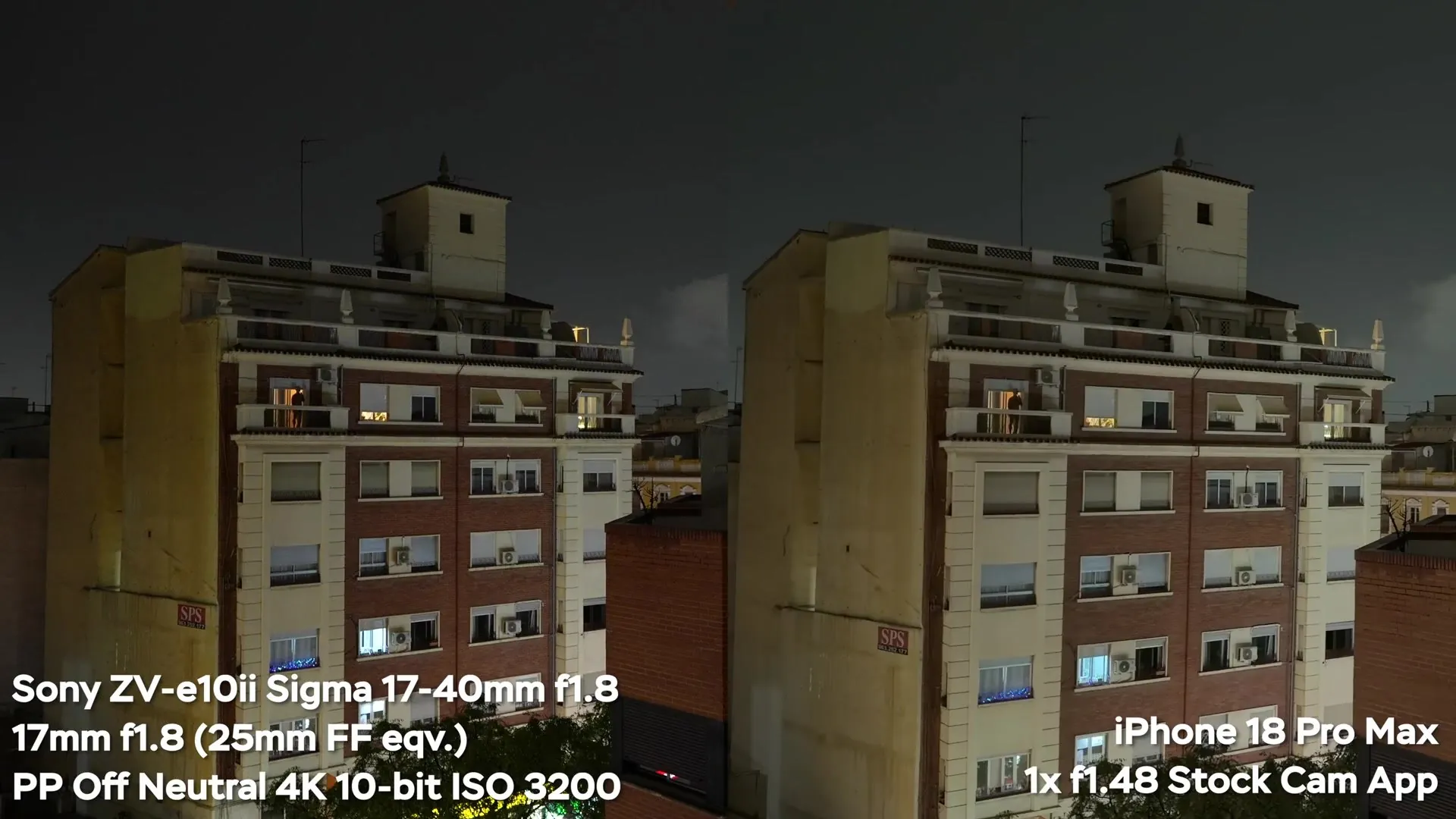
With the slow kit lens pushed to ISO 16000 and beyond, the iPhone looked cleaner. Look closer, though, and the building facades have no texture left. Noise reduction has smeared them flat.
Swap to the Sigma f/1.8 at ISO 3200 and the picture changes. The Sony shows a little more grain, but you can count individual bricks on the wall. On the iPhone, the same wall looks painted.
Which takes better photos?
For photos, the iPhone surprised us. In 48MP mode it captured more detail overall, and its 4x shot beat the Sony at 50mm. Then it keeps going to 8x.
The Sony won where glass matters: portraits and close-ups of flowers, thanks to softer blur and closer focusing. At night, iPhone night mode beat the kit lens, until the Sigma went back on. One caveat before you buy the ZV-E10 II for stills: it has no mechanical shutter. It is a video camera first.
Which holds up better on battery, heat and durability?
This is where the phone quietly pulls ahead.
- Battery: about 2 hours of 4K per Sony battery, against around 8 hours of 4K 25 on the iPhone.
- Heat: the Sony started to overheat after 1 to 1.5 hours at 26 to 27°C. The iPhone recorded 4K 60 for up to an hour in direct sun at 40°C.
- Weather and access: the iPhone is water resistant, the Sony is not. Some venues also turn away anything that looks like a camera, and our presenter has been stopped with this little Sony before.
- Storage: the Sony has a single SD slot. The iPhone can record to an external SSD, but not to both at once.
Should you buy a camera or use your iPhone?
Buy the Sony ZV-E10 II if you film yourself a lot, love creamy background blur, or shoot at night and will invest in at least one fast lens. It also makes a great second angle on bigger shoots.
Keep the iPhone 18 Pro Max if you travel light, shoot on the move, need long recording times, or want to film, edit and post from one device. Shoot it in Apple Log 2 or ProRes RAW and it holds its own.
What gear did we use in this iPhone vs mirrorless test?
Most of the camera look comes down to controlling light and adding real glass. These are the Freewell pieces we used or recommend for this exact setup.

For the iPhone
iPhone 18 Pro Max Filmmaker Case
Kevlar · MagSafe · magnetic filter mount · 17mm lens thread
$79.99
SHOP THE CASE →
For motion
iPhone 3 in 1 Magnetic ND Filter
ND8 · ND32 · ND64 in one filter, as used in our test
$79.99
SHOP THE ND FILTER →
For the camera
Real Locking VND/CPL Filter All Day Kit
VND 3-7 stops with CPL · ND32 for up to 10 stops · locking mount
$249.99
SHOP THE KIT →
Go wider
16mm Wide Angle Lens
105° view on the sharper 1x camera · 58mm filter thread
From $129.99
SHOP THE LENS →
Get closer
1.7x Telephoto Lens
Optical reach for portraits and distant subjects
From $129.99
SHOP THE LENS →
Go widescreen
1.33x Anamorphic Lens
Cinematic aspect and flares, great with open gate
From $129.99
SHOP THE LENS →Want even more range? The 8mm Fisheye Lens and the 6x Telephoto Lens also thread onto the case’s 17mm mount.
Final thoughts
By the end of the shoot, we hadn’t found a loser. We found two tools that are good at different things.
The ZV-E10 II is a great first step into dedicated video, and it gets better with every lens you add. The iPhone is the camera that is already in your pocket, and in log or ProRes RAW it produces footage that is genuinely hard to pick out in a blind test. Watch the full comparison and see if you can spot which is which.
Prefer to watch on YouTube? Watch the full iPhone 18 Pro Max vs Sony ZV-E10 II comparison on YouTube.
Shoot smarter, carry less
Your phone is already a camera.
Give it real glass.
Start with the same case and ND filter we used in Valencia, then add lenses as your shots demand.
SHOP IPHONE FILTERS →